
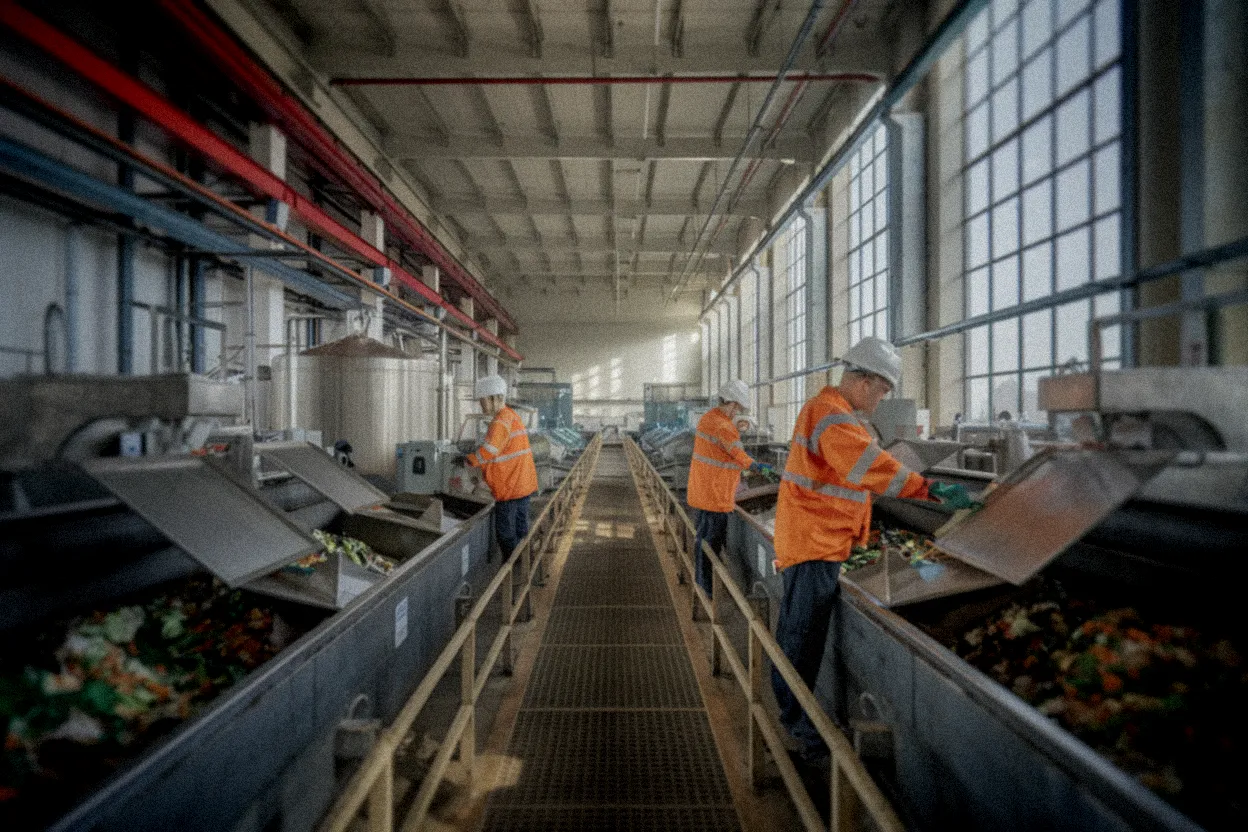
In France’s Moselle department, a pioneering industrial facility is taking organic waste that would otherwise be trashed and turning it into feedstock for recycling and energy production. The site—described by its manager with a simple comparison, “It’s a bit like in a kitchen”—sorts, conditions, and routes biowaste into recovery channels instead of sending it straight to landfill or incineration.
Opened in 2022, the plant is billed as Moselle’s first pretreatment unit dedicated to organic “biodéchets,” a category that includes food waste and other biodegradable materials. Later that same year, it was recognized as one of 12 award-winning projects highlighted at an October 2022 ceremony.
A facility built around France’s push to separate biowaste
Moselle moved early to create dedicated infrastructure as the national debate intensified over separating biowaste at the source. The plant’s model centers on pretreatment: waste arrives raw, mixed together, and sometimes in poor condition, and the facility prepares it so it can be sent into recycling streams or to anaerobic digestion (methanization) for energy recovery.
The “kitchen” analogy reflects a step-by-step industrial process. Organic material is separated from unwanted contaminants, then moistened or dried depending on what’s needed before being sent to the next stage. That behind-the-scenes preparation—often overlooked in waste management—directly affects the quality of the final output.
An October 2022 award put the Moselle site among 12 recognized projects
The project drew quick recognition. In October 2022, 12 initiatives were honored at a ceremony held in the presence of Pia Imbs, with the Moselle pretreatment site listed among the winners.
The award served as a public validation of an approach that was still relatively uncommon in a territory where biowaste treatment had previously been less structured.
A quiet but essential link in the region’s circular-economy chain
Facilities like this remain rare in France, in part because handling household and commercial biowaste requires specialized—and often expensive—equipment that few areas have deployed at this scale. Moselle is presented as a forerunner in the Grand Est region, with a unit able to process both household organic waste and professional streams, including organic wastewater generated by certain industries.
For local governments and regional businesses, the stated goal is twofold: cut the amount of waste that ends up buried or burned, and produce secondary raw materials that can be used in agriculture or the energy sector. Pretreatment is described as the indispensable condition for making that loop work.
As rules around separate biowaste collection continue to ramp up, the volumes needing treatment are expected to rise in the coming years—putting sites like Moselle’s at the center of the system.

