
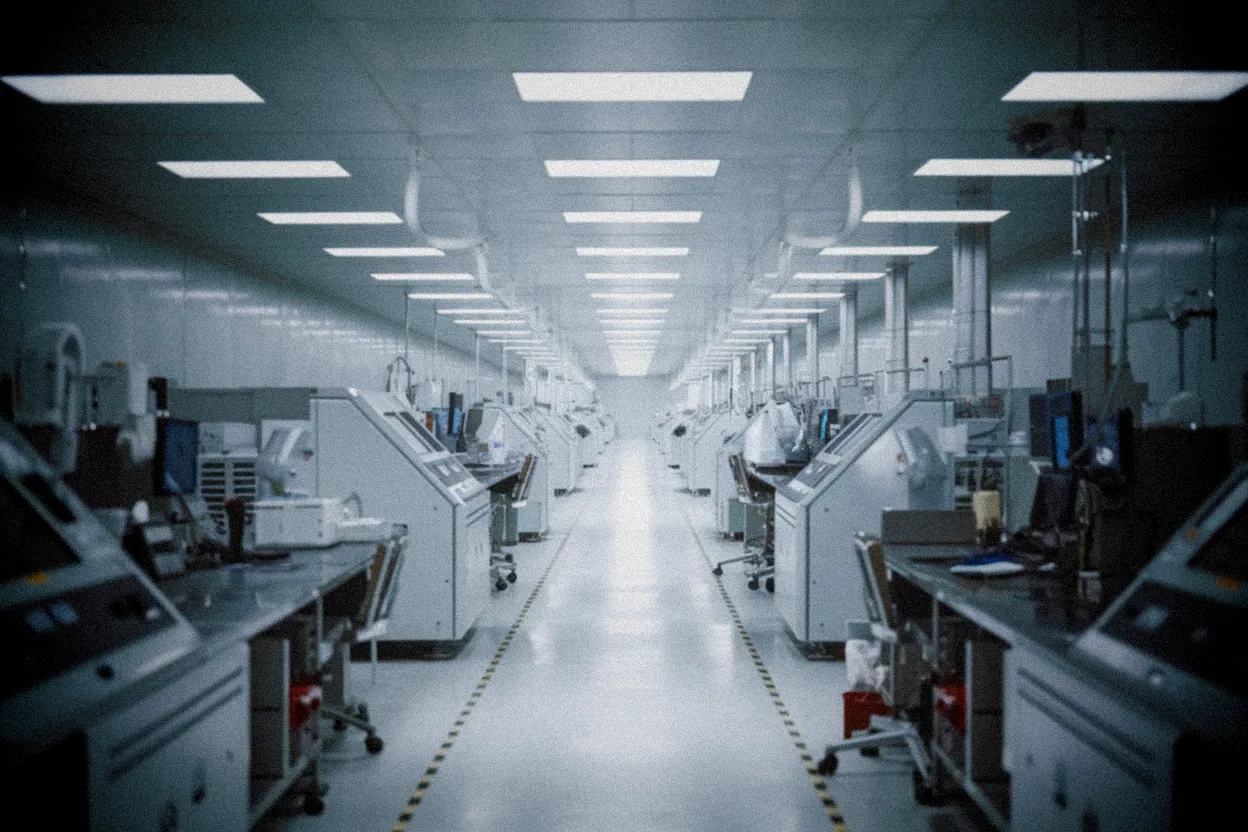
In central France, a dense pharmaceutical manufacturing hub known as the “medicine valley” is trying to stay steady even as geopolitical tensions rattle global supply chains for drugs and chemical ingredients.
Centered in the Centre-Val de Loire region along the Loire River corridor, the cluster is one of the few places in Europe where large-scale drug manufacturing sits alongside basic research and clinical development. Industry players say that mix—built up over decades—helps the region absorb shocks that can hit more isolated production sites harder.
But the war in the Middle East is now creating indirect pressure on the maritime routes that feed Europe’s pharmaceutical industry, stretching delivery times and raising freight costs for key inputs.
A decades-built manufacturing web in the Loire corridor
Centre-Val de Loire hosts several major pharmaceutical production sites, including facilities owned by international groups that have placed strategic capacity in the region. The concentration didn’t happen by accident: location decisions made in the 1970s and 1980s gradually turned the area into a center of excellence, later drawing subcontractors, equipment suppliers, and quality-control labs.
That territorial network creates a kind of resilience that stand-alone sites often lack. When supply tensions hit for an active pharmaceutical ingredient, manufacturers can pool logistics resources or shift toward alternative suppliers already identified within the same regional network. The article contrasts that with some Asian pharmaceutical clusters that are more tightly focused on a single link in the chain, offering less flexibility in a crisis.
Middle East conflict ripples into shipping lanes—and into drug inputs

The war is having concrete effects on the sea lanes that supply Europe with chemical raw materials and active ingredients. Ship diversions around the Gulf of Aden have lengthened delivery times and pushed up freight costs—hitting first the manufacturers most dependent on imports from India and China.
France—and Centre-Val de Loire in particular—has not escaped that structural dependence on Asian active ingredients. The article notes that even before the Covid crisis, Asian suppliers already accounted for more than 80% of global production. Loire-area sites that make finished-dose medicines from imported substances have therefore faced tighter inventories, even though no major production stoppage has been reported so far.
France’s national health authority, the Haute Autorité de santé, has also flagged a rising level of pressure from the pharmaceutical industry on regulatory bodies. Its president, Lionel Collet, said that pressure has accelerated noticeably since late 2025, as companies seek to secure their positions in the French market [4].
Why the cluster is holding up—and where it’s exposed
The article points to a key strength: a more vertically integrated local ecosystem than many European peers, combining mass production with contract development and manufacturing organization (CDMO) capacity. That pairing can appeal to customers looking to outsource part of their production without leaving Europe—an added layer of security during geopolitical stress.
At the same time, the region remains exposed to disruptions in Asian active-ingredient supply, especially when shipping routes in and around the Red Sea are under strain.
And the cluster faces competitive gaps. Ireland, which attracts a large share of European pharmaceutical investment thanks to its favorable tax environment, is described as the most formidable rival for large biotechnology production sites. The Centre-Val de Loire region has not yet caught up in complex biologic medicines, a fast-growing segment tied to Europe’s broader push for health sovereignty.
Germany, meanwhile, benefits from a network of mid-sized chemical and pharmaceutical firms—often referred to as the Mittelstand—that provides stronger upstream integration, including for active ingredients. That’s a robustness the Loire cluster cannot yet claim, despite efforts launched since the Covid crisis to bring some manufacturing back to France.
Europe’s “critical medicines” debate and the cost hurdle
The debate over pharmaceutical sovereignty has taken on new urgency as Middle East tensions persist. European governments are accelerating work on lists of essential medicines that should be produced within Europe. France is pushing for the revision of European pharmaceutical legislation to include localization requirements for certain critical molecules.
Centre-Val de Loire sites could benefit directly—if they can anticipate the investment needed. The article says discussions are focusing on the production of critical generics, vaccines, and some antibiotics. But cost competitiveness remains a major obstacle: producing in France is structurally more expensive than in India or China, and Europe-wide mechanisms to offset that price gap are not yet settled.
AI-driven drug discovery is a separate competitive front
The growing use of artificial intelligence in drug discovery and development is opening another arena of competition. The article cites companies such as Google DeepMind and FutureHouse using AI agents to identify whether molecules active against certain diseases could be repurposed for other conditions—potentially speeding up global R&D pipelines [4].
Loire-area players, largely focused on industrial production rather than discovery, are not at the center of that shift, the article says—though some regional labs work in connection with university research teams.
What the next few months will test
The cluster’s resilience will be tested on multiple fronts at once. The biggest unknown is how long the Middle East conflict lasts—and therefore how long maritime disruptions persist. If tensions drag on, buffer inventories built up by manufacturers could eventually run down, forcing difficult choices about production lines.
Regulatory momentum in Europe could move in the opposite direction, strengthening the value of local capacity. Stock-reporting obligations and the proposed Critical Medicines Act now under discussion in Brussels could create a more favorable environment for European producers, mechanically narrowing the competitiveness gap with Asia.
The remaining question is speed: how quickly Loire-area sites can build capabilities in biologics and advanced therapies. That, the article argues, will determine whether the next generation of France’s “medicine valley” takes shape.

