
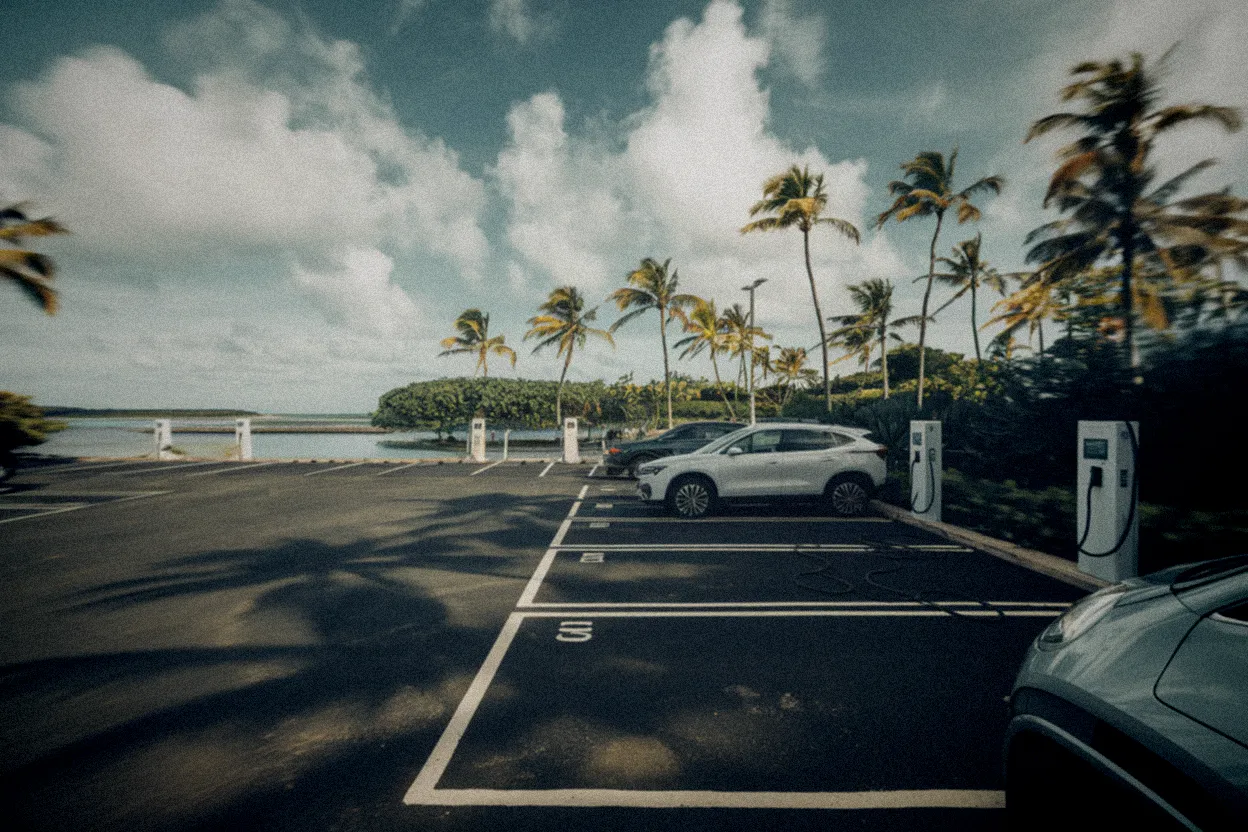
France’s remote Pacific territory of Wallis and Futuna will not be required to install electric-vehicle charging stations in parking lots, after receiving an official exemption from regulations that apply across mainland France and most overseas territories.
The decision reflects the archipelago’s unusual legal framework and on-the-ground realities in one of France’s most isolated communities—thousands of miles from Paris and structurally different from other French jurisdictions.
A national rule that doesn’t automatically extend to every French territory
In mainland France and in most of France’s overseas departments and collectivities, owners of parking facilities above certain capacity thresholds have been required for several years to equip their sites with EV charging stations. The goal is to support the rapid growth of electric vehicles.
Wallis and Futuna falls outside that system. The archipelago has about 11,000 residents spread across three islands and operates under its own legislative framework: French national laws apply there only when they explicitly say they do.
That means the exemption is not a special carve-out granted at the margins, but a direct consequence of the territory’s constitutional status, governed by the law of July 29, 1961. Because the rules on charging infrastructure did not expressly extend to Wallis and Futuna, the exemption applies as a matter of law.
The exemption highlights bigger questions about the energy transition in the Pacific
The issue goes beyond charging stations. Wallis and Futuna does not have a structured road network in the continental sense, and the electrification of transportation remains in its early stages. Requiring charging infrastructure in parking lots—many of which do not exist as organized facilities—would have limited practical value.
Still, the formal exemption raises a broader question about how France is managing its energy transition across its most isolated overseas territories. So far, no specific public roadmap has been released for Wallis and Futuna to support any eventual shift toward electrified local mobility.

