
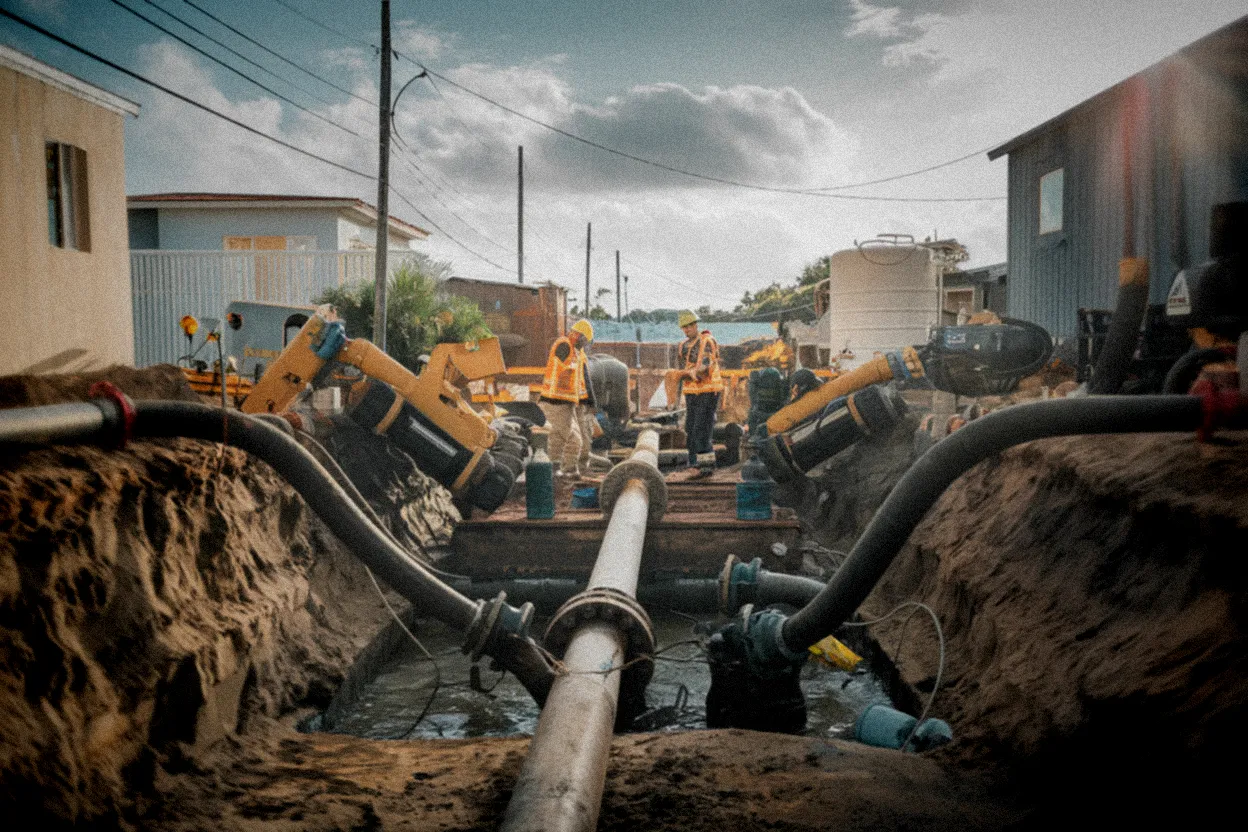
A fuel pipeline incident temporarily cut off the drinking-water supply on the French Caribbean island of Saint-Barthélemy, a reminder of how tightly island water systems can be tied to energy infrastructure. Temporary measures were put in place to limit the impact on residents and restore service.
The disruption also lands as the French state is planning a major investment—€30 million (about $32 million)—aimed at making water supplies in France’s overseas territories more resilient through storage, sharing and reuse.
Fuel network problem triggers islandwide water disruption
Saint-Barthélemy—often called St. Barts in English—found itself without water after an incident on a fuel pipeline affected the island’s water supply. The outage hit a territory that, like many small islands, is especially exposed to technical weak points in critical infrastructure.
The episode highlights a structural vulnerability common in island communities: cross-dependence between energy networks and water production. On French islands, drinking water production often relies on desalination units supplied by fuel, meaning an energy supply failure can quickly translate into a potable-water shortage.
France’s “Meren” project: €30 million (about $32 million) for water storage, sharing and reuse
French authorities have previously flagged the risk of these kinds of disruptions. The state announced €30 million (about $32 million) in funding for the Meren project, designed to deliver a long-term solution for storing, sharing and reusing water across France’s overseas territories.
The funding announcement was made by former Prime Minister Élisabeth Borne during a government sequence focused on its “Outre-mer” strategy—France’s policy framework for its overseas regions and collectivities.
The stated goal of Meren is to move these territories away from perpetual crisis management. Instead of patching systems after each incident, the project is intended to build infrastructure that can absorb technical, climate and logistics shocks.
Water management strains across France’s overseas territories
Saint-Barthélemy is not alone. Across France’s overseas territories, drinking-water management is challenged by aging networks, lagging environmental compliance and reliance on desalination equipment.
On Réunion, the intermunicipal authority known as the CIViS (a local agglomeration community) entered into an environmental public-interest judicial agreement validated by the Saint-Pierre court after compliance failures involving public water-management installations that had been flagged as early as 2022. CIViS was ordered to pay a €60,000 fine (about $65,000) to the French Treasury and must bring the situation into compliance within two years.
The article notes that a 2020 transfer of responsibility for drinking water—from a municipality to the agglomeration community on Réunion—left unresolved formal notices. CIViS’s attorney cited those circumstances to provide context for the compliance failures.
Systems built for emergencies, not long-term resilience
On Saint-Barthélemy, the temporary measures deployed after the fuel incident restored access to water. But the sequence exposed a model that remains heavily reactive.
Island territories often operate with very little slack. A generator failure or a damaged pipeline can jam the entire water-production chain. Backup options exist, but they can take time to deploy and are costly to keep on permanent standby.
That is the bottleneck Meren is intended to address—by giving overseas territories enough storage and redistribution capacity to last several days without relying on real-time production.
Saint-Barthélemy’s autonomy doesn’t eliminate technical dependence
Saint-Barthélemy has held the status of an overseas collectivity since 2007, with real administrative autonomy. But institutional autonomy does not always translate into technical autonomy for vital resources. This incident, the article argues, again showed how critical water remains as a point of dependence.
The piece also points to a separate sign of modernization: France’s telecom regulator ARCEP launched a 2024 call for applications to award 5G frequencies in Saint-Barthélemy, Saint-Martin and other overseas territories. Water infrastructure modernization, by contrast, is moving more slowly.
The planned €30 million (about $32 million) for Meren is described as a strong signal, but its real value will depend on the rollout timeline. In the meantime, Saint-Barthélemy residents have regained running water thanks to emergency measures put in place after the fuel-network incident.

