
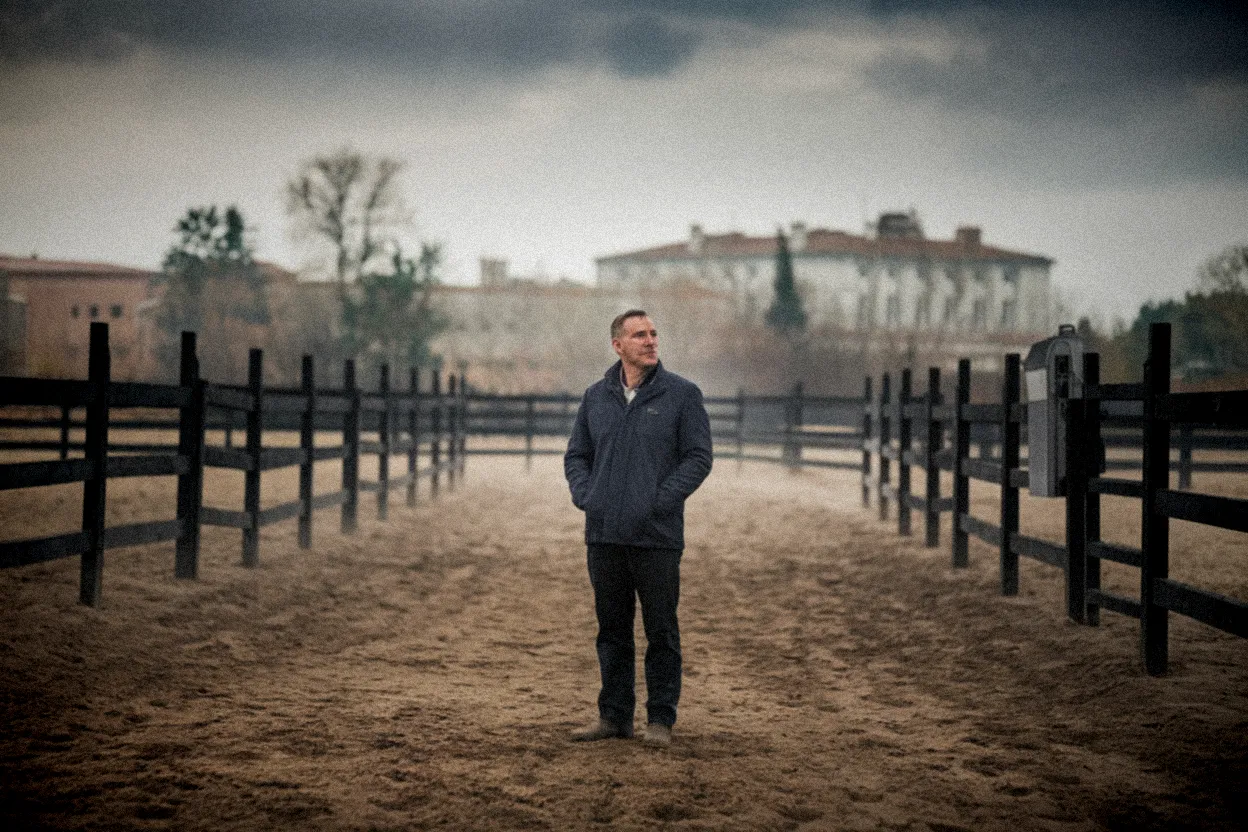
A private horse-boarding business in Machecoul, a rural town in western France, says a standoff with the local government has put its future at risk—and the owner fears the operation could be forced to close.
“This is the end of my business,” the stable operator said, describing a direct conflict with Machecoul’s municipal government. The dispute was still unresolved as of June 18, 2026, according to the article, and key details of the disagreement have not been made fully public.
In a town wedged between the Marais Breton wetlands and the outskirts of Nantes, the stakes are immediate for a horse-boarding facility: monthly-paying owners, local jobs—often part-time—and fixed infrastructure that can’t be moved overnight.
A rural town facing the push-and-pull of local planning
Machecoul-Saint-Même—formed by the merger of two communes—grew out of an agricultural landscape where equestrian activities have long had a foothold, from nonprofit riding centers to private boarding stables.
When a city hall and a private operator clash over a site like this, the article notes, the issues are rarely purely regulatory. Disputes can involve land-use planning, perceived nuisances, development projects, or land-related litigation.
The stable operator has left little doubt about how serious he believes the situation is. His blunt line—“the end of my business”—signals both attachment to the work and a belief that the balance of power is against him.
Why private equestrian boarding can be vulnerable to local decisions
Private horse-boarding stables occupy a narrow economic lane in France. The article says they do not benefit from the same protective framework as agricultural operations in the strict sense, even though they depend heavily on land access and local government tolerance for their facilities.
A shelter, paddock, or sand arena can’t simply be relocated. And when a municipality makes an unfavorable decision, the operator may have limited room to maneuver.
The conflict in Machecoul reflects a recurring tension in France’s peri-urban areas, where pressure on land and municipal development ambitions collide with long-established rural activities. For now, the stable’s fate remains uncertain.
The business’s future hinges on a standoff with no public resolution
No agreement has been announced between the two sides. The stable operator maintains that his business’s survival depends directly on how the dispute ends.
Machecoul-Saint-Même’s city hall has not publicly communicated its position or any measures under consideration, according to the article.
For horse owners who board animals there, the uncertainty is also practical: finding a replacement stable in the same area—between wetlands and the Nantes metro fringe—is neither quick nor guaranteed.

