
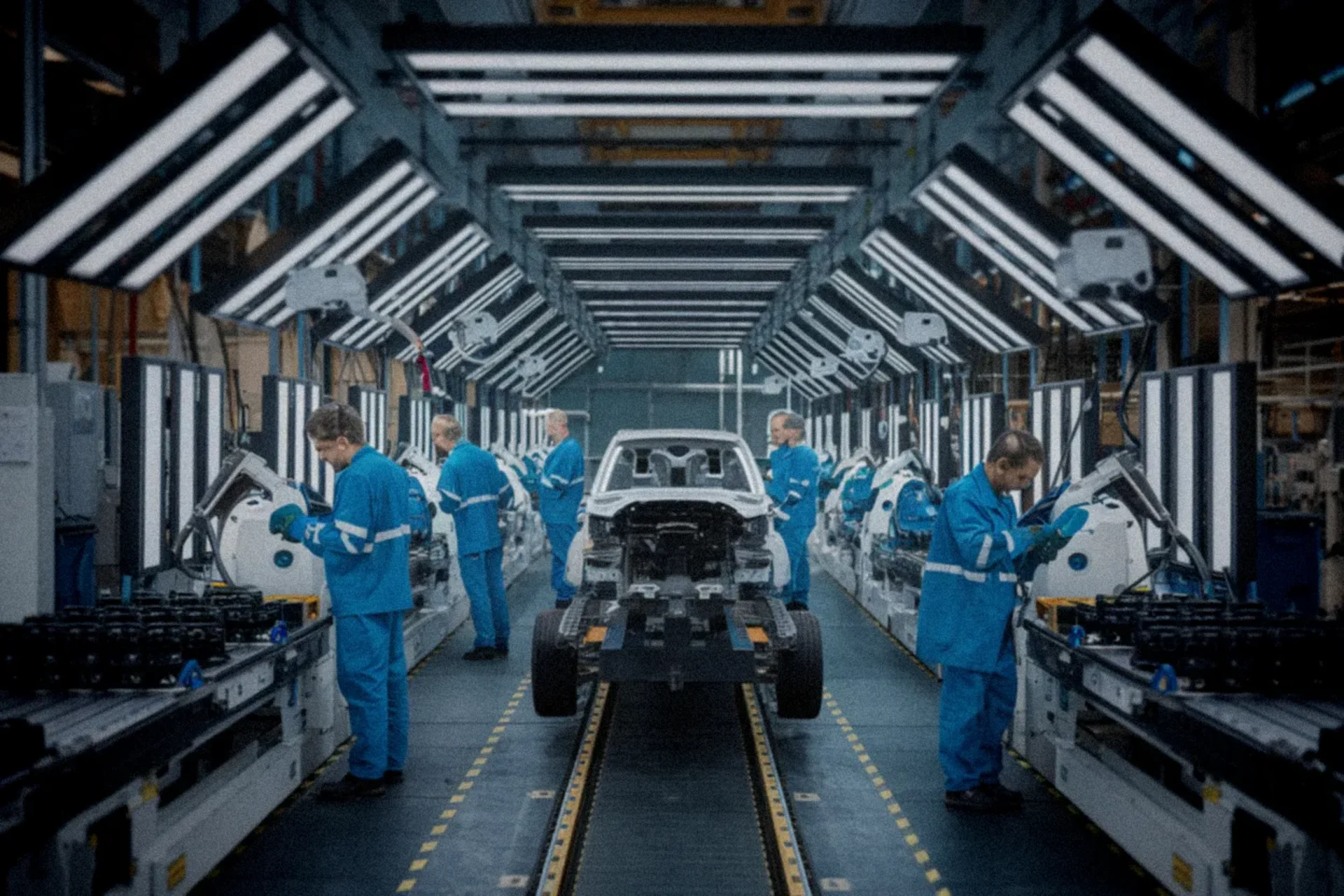
Renault is making its Slovenian subsidiary Revoz—based in Novo Mesto—its first fully electric vehicle plant outside France, shifting the site entirely to EV production in 2026 with the Twingo E-Tech Electric.
The decision has drawn a familiar question in Europe: why build the new electric Twingo in Slovenia rather than in France? Renault’s answer is rooted in history. Since 1972, Revoz has been the country’s only auto plant and a long-running hub for Renault’s small city cars, with more than 5.1 million vehicles produced for the French automaker, including 1.6 million Twingos and 2.2 million Clios.
Renault is not treating Revoz as a short-term contractor for its most affordable electric city car. The Novo Mesto plant assembled nearly all generations of the Clio, all of the Twingo 2 and later models, and earlier classics including the Renault 4 and Renault 5—making a production move elsewhere a hard sell inside the company’s own industrial logic.
What Renault is building in Novo Mesto: 82 horsepower and about 186 miles of range
The new Twingo E-Tech Electric is based on a shortened version of Renault’s AmpR Small platform, the same architecture already used by the Renault 5 E-Tech Electric. The powertrain is rated at 82 horsepower, paired with an LFP battery from CATL of about 30 kWh. Renault is targeting around 300 kilometers—about 186 miles—of driving range.
Development was carried out partly in China with local partners and completed in just 100 weeks, an unusually fast timetable by traditional auto-industry standards.
Production began in Novo Mesto in 2026, making Revoz Renault’s first plant outside France to switch entirely to EVs. For now, the group’s other electric models are all assembled in France.
Revoz is not starting from scratch on electrification. The plant had been building the phase 3 gasoline-powered Twingo, and its infrastructure was adapted to accommodate the E-Tech production line. At maximum output, Revoz can build up to 220,000 vehicles a year and employs more than 2,150 workers.
$486 million invested—and a Carlos Ghosn quote that still frames the mission
Renault’s Novo Mesto site has attracted €450 million in total investment (about $486 million), including a €22.5 million subsidy (about $24.3 million) from the Slovenian government. At the plant’s inauguration, former Renault-Nissan chief Carlos Ghosn attended in person and laid out the goal: “The main objective of the Slovenian Revoz plant is to successfully launch production of the new Twingo and remain one of the best Renault-Nissan plants.”
Over the decades, the factory’s ramp-up has matched that ambition, absorbing significant volumes of small cars that mattered to Renault’s European sales totals.
The site’s history stretches back more than 70 years, and the article argues it is more than an industrial asset that can be moved around based on labor costs. Numerama, which visited the plant on May 19, 2026, reported that Revoz’s reputation is not that of a “low-cost” factory, but of a mature operation integrated into Renault’s quality system for more than five decades—supported by a workforce trained across generations to the company’s standards.
Nissan is next: a second small EV is slated for the same Slovenian lines in 2027
The Twingo E-Tech won’t be the only small EV coming out of Novo Mesto. Nissan is preparing its own electric city car that will share the full technical architecture with the Twingo, including the 82-horsepower motor and the roughly 30 kWh battery, with range capped around 300 kilometers (about 186 miles). The model could revive the name Pixo, is expected to be unveiled in late 2026, and is scheduled to go on sale in 2027—also built at Revoz.
That effectively positions Novo Mesto as a production hub for the Renault-Nissan Alliance’s small electric cars in Europe. Renault has confirmed pricing for the Twingo below €15,000 after incentives (under about $16,200), according to Numerama—making it the most accessible mass-market EV in Renault’s lineup and a key test of whether low-priced electric city cars can scale in Europe.

