
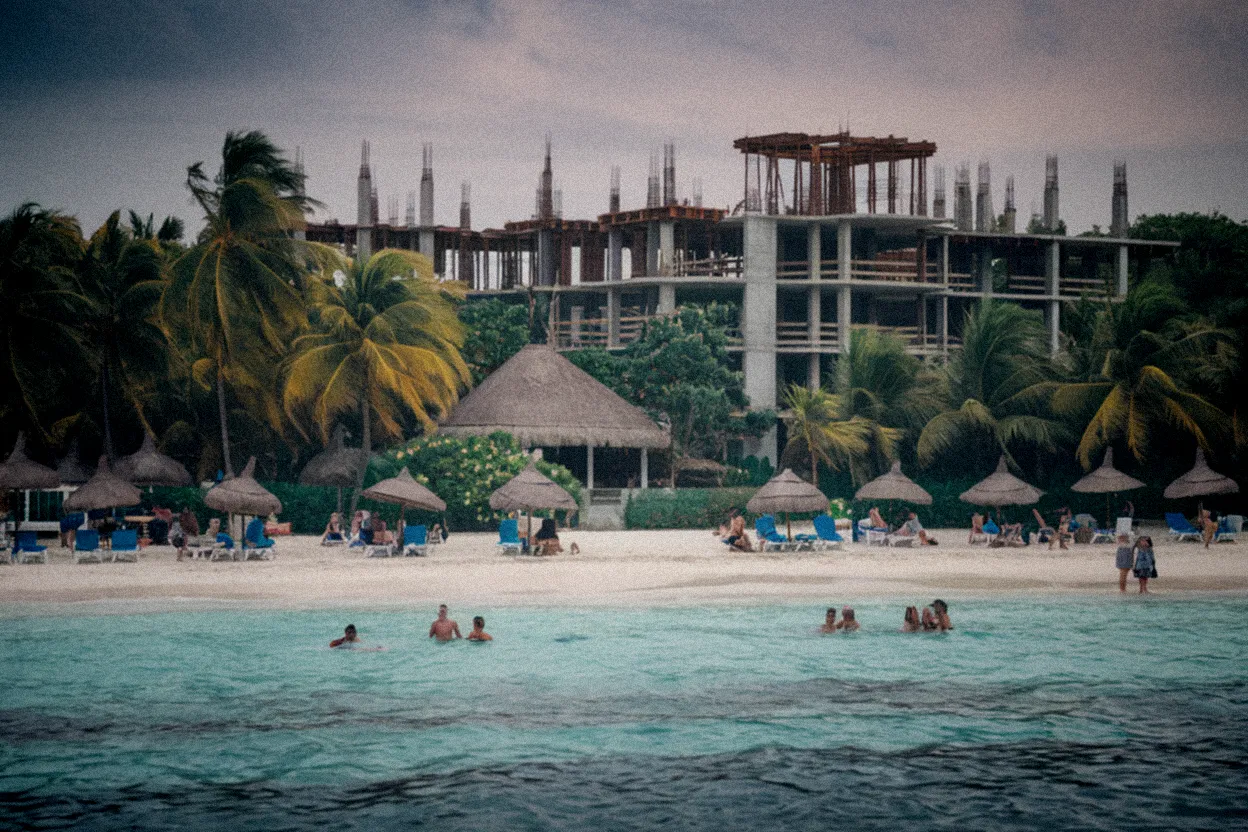
Tourism—especially cruise traffic—helped keep the economies of France’s Caribbean islands on their feet in 2025, even as construction continued to weaken and household finances came under heavier strain, according to new annual reports from the IEDOM.
The IEDOM, a French public institution that tracks and supports monetary and financial conditions in France’s overseas departments, described island economies that are holding steady without returning to full speed. In both Martinique and Guadeloupe, the same fault line emerges: tourism supporting activity, a construction sector losing momentum, and more vulnerable households.
Cruise tourism drives activity, IEDOM says
In Martinique, cruise tourism powered growth in the broader tourism economy in 2025, the IEDOM reported. The institute said the island’s economy remains fragile overall, but the tourism sector is holding up.
Guadeloupe showed a similar pattern. Tourism again played the role of economic engine, with sustained visitor numbers and private investment staying at a high level—one of the main takeaways from the IEDOM’s annual economic and financial report for the archipelago, published June 16 and cited by France-Antilles.
François Groh, director of IEDOM Guadeloupe, and Damion Gordon, who leads the institute’s economic and monetary studies unit, presented the findings at a news conference in Dothémare. Groh also placed the local figures in an international context, pointing in particular to how the conflict in the Middle East has affected fuel prices.
Construction still squeezed as household distress rises
Construction (BTP, the French shorthand for building and public works) continued to rack up problems. In Guadeloupe, the sector is still adjusting after several years of declining public procurement, a trend the IEDOM said has been visible since 2022. Companies are also struggling to hire because the needed skills are not readily available.
The labor market, however, showed some resilience. The number of Category A job seekers in Guadeloupe fell 1.4% over the year, and private-sector employment remained at a high level. Even so, the unemployment rate remains structurally high, and staffing strains persist in health care as well as construction.
For households, the picture worsened. Guadeloupe recorded 817 over-indebtedness filings in 2025, up 23.4% from the previous year. Purchasing power remained under pressure, and so did household consumption.
In Martinique, the IEDOM counted 675 over-indebtedness filings in 2025, rated 1,860 companies, and withdrew 48.4 million banknotes. The institute pointed to a “context of weak growth” and “structural challenges,” documented through 23 publications and 120 outreach actions or interviews over the year.
2026 outlook remains uncertain, with one bright spot
The outlook for 2026 is still uncertain, the IEDOM said, with an international environment that does not encourage risk-taking. One of the few positive signals heading into the coming months: inflation is now under control in Guadeloupe.

