
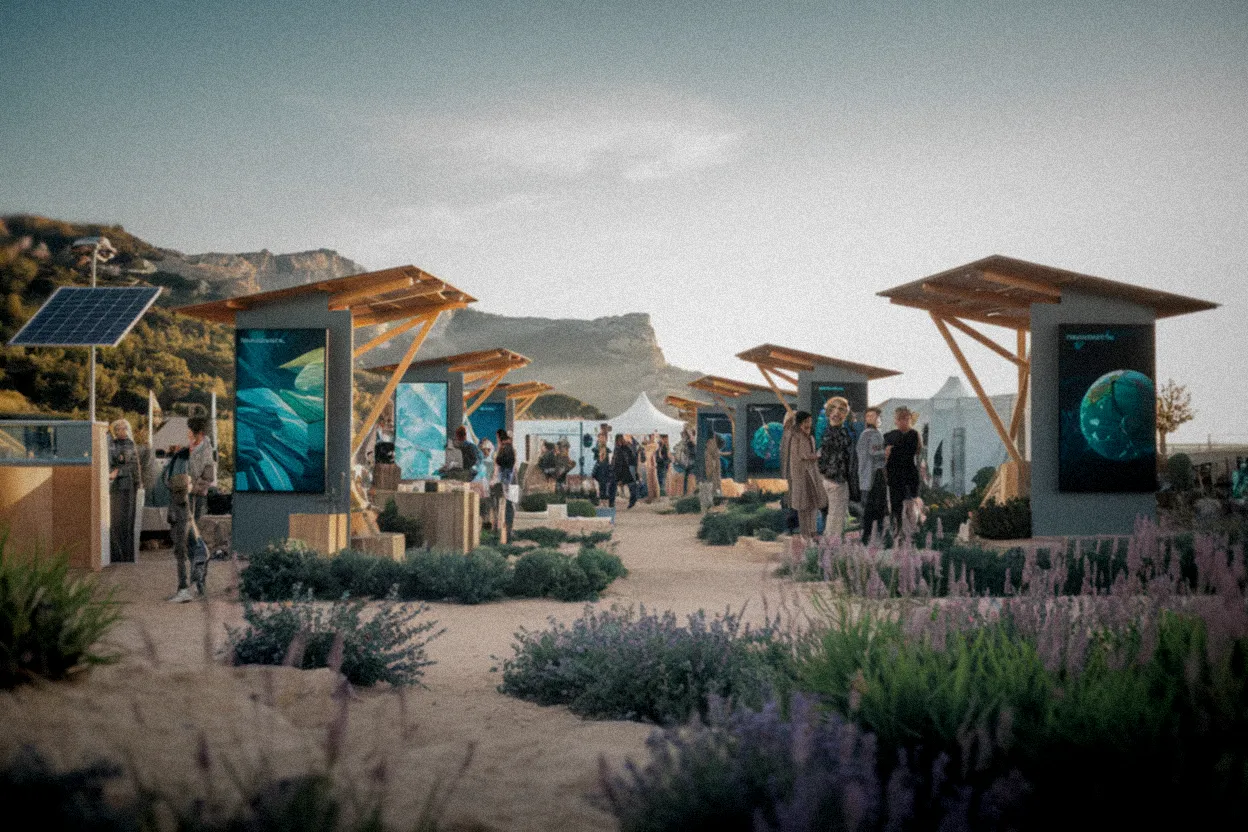
Can a Mediterranean port city and a nearby French island become a real-world test site for greener infrastructure—using digital tools as the backbone? That was the practical question put on the table at the Isula Festival, held in Marseille from June 7 to 9.
Led by Audrey Lucchinacci and focused on ties between Corsica and Provence, the event brought together people directly involved in the region’s transition efforts. A central roundtable zeroed in on how infrastructure can adapt to environmental and economic pressures—spanning transportation, energy, decarbonization, digital technology, and the circular economy.
Marseille and Corsica: A shared infrastructure puzzle, not two separate stories
Kévin Polizzi, president of Unitel Group, framed the starting point bluntly: Marseille’s and Corsica’s infrastructures are complementary—and together they are reshaping the region’s economy. The argument went beyond ports and ferries.
For Polizzi, “transport” isn’t only about people and goods. It is also, he said, “that of data.” In practice, that means undersea cables, connectivity hubs, and the information flows moving between mainland France and the island—elements he cast as part of the same debate over what future infrastructure should look like.
Marseille is already one of the Mediterranean’s major landing points for undersea cables. Corsica, geographically isolated, depends on that connectivity for any serious digital ambitions. The festival’s message: treat the island and the mainland link as one ecosystem to plan—rather than two separate entities.
Digital tech and AI move from “add-on” to core design requirement
Panelists argued that digital tools and artificial intelligence can no longer be bolted onto infrastructure projects after the fact. Instead, they said, they need to be built in from the design stage—on the same level as energy constraints and decarbonization targets.
That stance matters in a context where island governments often struggle to attract tech investment. Presenting digital infrastructure as a lever for energy and economic sovereignty marks a shift in framing: not tech for tech’s sake, but tech as a tool for a development model tailored to a constrained territory.
The circular economy fit into the same logic—reducing inbound flows (raw materials, imported energy, exported waste) by optimizing what already exists locally. Digital systems can help track material flows, optimize local energy networks, and manage transportation more intelligently.
A “laboratory for ecological transition”—ambitious, plausible, and not automatic
One question surfaced repeatedly in the debate: can Corsica and Marseille become a “laboratory for ecological transition”? The festival treated the idea seriously—without romanticizing it.
Corsica has several traits that make it a workable test bed: a manageable scale, heavy energy dependence (the island is not interconnected to the mainland grid), strong environmental sensitivity in local public opinion, and a network of stakeholders who—while not numerous—are often deeply engaged. Those are the conditions where experiments can succeed: tight constraints, a defined territory, and identifiable participants.
Marseille brings different assets: critical mass, a geostrategic position in the Mediterranean, and dense digital infrastructure that makes it a gateway. The complementarity, speakers argued, is real. What is still missing is shared governance to turn that complementarity into coordinated projects.
Carbon taxation and shipping: Corsica’s transport agency signals a shift
The festival took place as maritime operators linking mainland France and Corsica face growing pressure. Corsica’s transport office—the Office des transports de Corse—has recently made a gesture toward shipowners on carbon taxation, a sign that decarbonizing sea links is now an active file, not a distant prospect.
That matters for an island economy structurally reliant on those connections. A ferry means freight and travelers—but also an energy dependence on fossil fuels that neither digital tools nor circular-economy strategies can erase overnight. The transition, the discussion acknowledged, will be long and costly, and the Isula Festival did not claim otherwise.
What the festival reveals about a more mature local debate
Organizers positioned the roundtable at the intersection of infrastructure, digital technology, energy, and the circular economy—explicitly through the lens of “environment and sovereignty.” Participants described that framing as a sign of a more mature debate than a decade ago, when these issues were often handled in silos.
The Isula Festival’s concept leans into the permeability between Corsica and Provence rather than administrative boundaries. That may be its most concrete value: forcing stakeholders from two territories to speak the same language about shared challenges. Polizzi summed it up in a single line—Corsica’s and Marseille’s infrastructures are complementary and are reconfiguring the regional economy. The next test is whether that complementarity becomes concrete projects that are financed and governed together.
Sources
CORSEMATIN.COM — “La Corse et les infrastructures face aux défis environnementaux”

