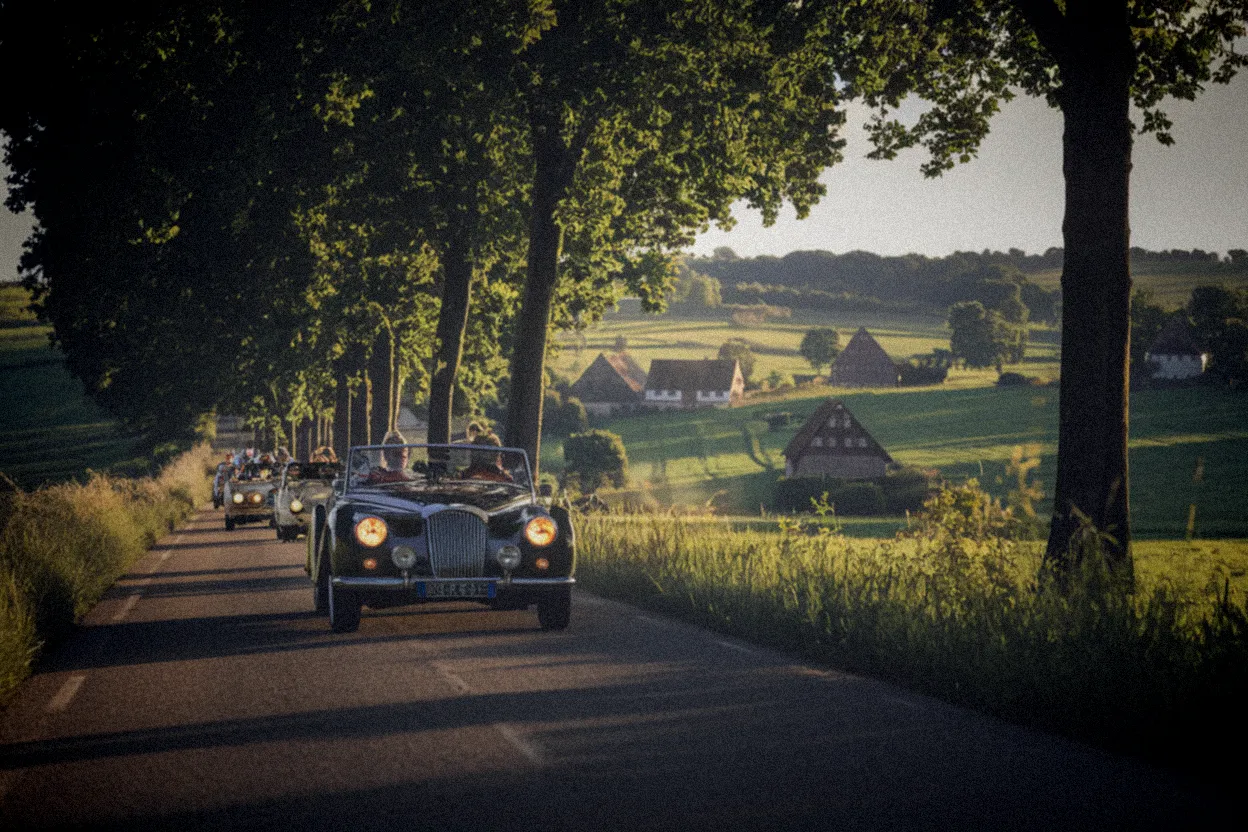
Normandy is leaning into a quirky new way to get visitors off the main tourist circuits: a self-drive “rallye-enquête,” or mystery rally, that mixes a road trip with puzzles to solve along the route.
The premise is straightforward. Participants hit the road in their own car, follow a themed itinerary, and decode clues as they go—turning backroads, villages, and historic stops into a kind of moving scavenger hunt. Organizers stress these rallies aren’t about speed or competition; the point is discovery.
It’s a natural fit for a region that can shift quickly from hedgerow-lined countryside to dramatic coastline, medieval towns, and major historic sites—ready-made “stages” for an event built around curiosity rather than a stopwatch.
Local tourism offices are building the routes—and the riddles
One of the groups working in this niche is the Office de Tourisme Communautaire (OTC) Seine Normandie Agglomération, based in Douains. Created in 2005, it employs 11 people and is led by Hélène Traen, known as Durand.
These local tourism offices often do the heavy lifting for events like this because they know the terrain, the local partners, and the scenic roads worth slowing down for. The mystery-rally format relies on that on-the-ground knowledge to design routes that work for families and heritage fans alike.
No special vehicle is required. Organizers frame it as accessible: a standard sedan is more than enough.
From Alençon’s tourist rally to Condé-en-Normandie’s trail race, 2026 is packed with events
Tourist-focused car rallies aren’t new in Normandy. In Alençon, a tourist automobile rally departing from the Super U shopping center on the Route de Rouen has already run multiple editions—at least through a sixth edition that, according to local organizers, left a strong impression.
And the region’s 2026 events calendar goes well beyond cars. In Condé-en-Normandie, the Trail des Collines normandes returned on April 11 with 1,000 runners expected. The mystery rally is being positioned as a complementary option—aimed at a different crowd than endurance sports.
The idea is also spreading outside Normandy. In March 2026, another region’s “Printemps des Rillettes” festival introduced a first-time classic-car rally organized by the Familles rurales association.
A niche between motorsport and local tourism
Organizers describe the mystery rally as occupying a middle ground in car-related leisure. It’s not part of the Coupe de France des Rallyes, the regulated competitive discipline where crews race—such as Pierre Ragues, winner of the 48th Rallye de la Côte Fleurie in Normandy.
It’s also not aimed at the crowd drawn to marquee motorsport events like the 24 Hours of Le Mans. Instead, its “playing field” is the country road, local heritage, and the everyday driver’s curiosity.
That positioning can give it staying power. With no rankings and no performance stakes, the appeal is repeatable: new routes, fresh puzzles, and the simple pleasure of driving with a purpose beyond getting from point A to point B.
Why Normandy’s landscape works for road-trip puzzle hunts
Normandy’s geography lends itself to themed routes: the winding roads of the Perche, the cliffs of the Pays de Caux, and the marshes of the Cotentin each offer a distinct atmosphere and ready puzzle material. Organizers can build mystery rallies around topics ranging from World War II to half-timbered architecture, as well as cider and local food traditions.
For tourism offices, the stakes are also economic. A mystery rally can steer visitors into villages that don’t have the name recognition of Honfleur or Mont-Saint-Michel. Participants stop, spend money, and sometimes return—using the car not as the point of the outing, but as the link between places that rarely make standard itineraries.