
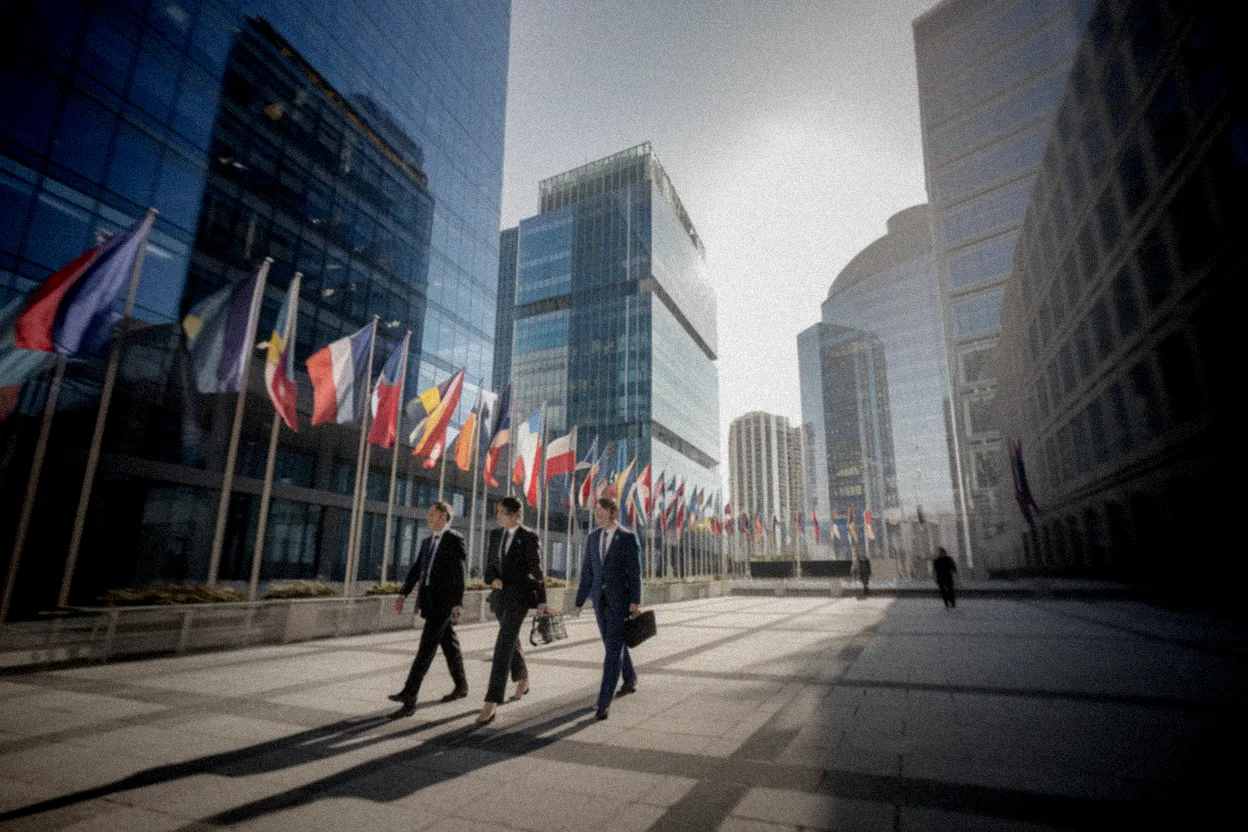
France’s flagship “Choose France” investment summit delivered a record haul on June 1, 2026, with President Emmanuel Macron announcing €93 billion (about $100 billion) in confirmed foreign investment pledges tied to 71 projects and 15,600 jobs.
Macron revealed the headline figure alongside SoftBank CEO Masayoshi Son even before the official opening in the gardens of the Palace of Versailles. The total alone tops the combined promises from the summit’s first eight editions—€87 billion (about $94 billion).
For Macron, who is nearing the end of his second term, the blockbuster number doubles as a political statement as much as an economic one.
SoftBank’s data-center bet drives the record
The eye-popping total is largely explained by one commitment: €45 billion (about $49 billion) pledged by Japan’s SoftBank for a data-center program to be rolled out in France by 2031. Without that single announcement, the overall figure would still be sizable—but far less of a break from prior years.
French officials and business leaders have increasingly pitched the country’s low-carbon electricity—especially nuclear power—as a competitive advantage for artificial intelligence players seeking data-center sites with a smaller carbon footprint, according to Les Echos. Investors from the Gulf and Asia, targeted this year as organizers sought to broaden the participant base, showed up in force.
More than 200 business leaders from about 50 countries attended. Europeans made up the largest share, but Americans still accounted for 18% of participants despite trade tensions with Washington. For roughly half of those in attendance, it was their first time at Choose France.
Versailles stagecraft, and a final-term message from Macron
In his closing speech—delivered in English to investors gathered in the palace gardens—Macron declared, “We are the most attractive country in Europe,” then set two priorities: “simplify” and “accelerate.” The record announcements, he said, are “the result of reforms, consistency, an ecosystem we were able to build.”
The Versailles setting has been part of the summit’s choreography since 2018. But this edition carried a different political weight: it was Macron’s last Choose France of his presidency, capping two terms partly focused on making France a more credible destination for foreign capital.
The summit also served as an implicit answer to critics who question how much of the fanfare translates into real-world hiring and investment beyond splashy headlines. This year’s project mix was deliberately broad—spanning data centers, low-carbon steel, logistics, and even cookie production—covering both major industrial infrastructure and smaller-scale expansions.
Paris region captures about 30% of the announced total
The Île-de-France region—home to Paris—and its investment agency Choose Paris Region published its own tally: 20 foreign direct investment projects worth more than €7 billion (about $7.6 billion) and “several thousand” jobs. That represents 30% of the national announcements made at the summit.
Choose Paris Region said the area now ranks as “the second most attractive region in Europe for foreign direct investment,” with a stated focus on “breakthrough technologies.”
The region’s outsized share is not a surprise given the concentration of corporate headquarters, R&D centers, talent, and transportation infrastructure. But €7 billion out of €93 billion—nearly a third—also highlights how geographically concentrated France’s investment pull remains.
A decade-old summit, with results that will be measured well after 2026
Choose France began in 2018, launched as Macron’s government pursued labor-market and corporate tax reforms. Each year, the Élysée Palace—France’s presidential office—runs a tightly scripted diplomatic-economic sequence: invitations to global CEOs, bilateral meetings, roundtables, and speeches. Versailles is chosen for symbolism as much as substance.
Several forces converged to produce this year’s record: global demand for data centers meeting France’s electricity supply, rising participation from Asian and Gulf investors looking to diversify beyond the United States, and a trade-war climate that has made Europe more visible as a stable alternative. Macron pointed to “predictability” and the “rule of law” as European advantages amid geopolitical turbulence.
The question that follows any pledge-heavy summit is how much will materialize into construction starts, operating production lines, and permanent hires. Previous editions have sometimes seen announcements fade over time. Still, the €87 billion (about $94 billion) accumulated over eight years suggests a substantial share does take shape, even if official communications provide limited project-by-project tracking.
SoftBank alone accounts for €45 billion (about $49 billion)—almost half of the 2026 total—and its data-center commitment runs through 2031. That means the real-world impact of the biggest pledge will be judged over the next five years, well beyond Macron’s term.

