
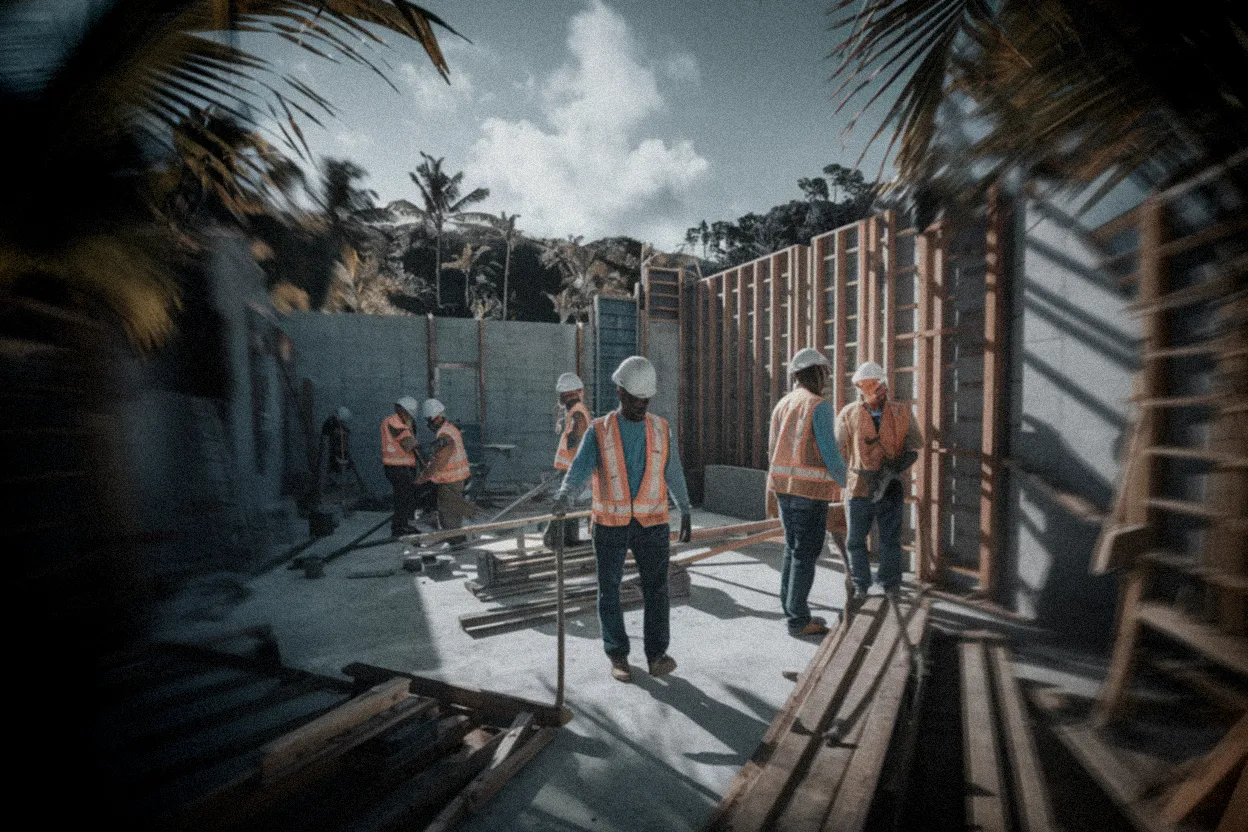
Employers in Martinique are planning more than 12,700 hires in 2026, according to France Travail Outre-mer, the French public employment service’s overseas arm—an early signal that staffing pressures on the island remain intense.
The figure, presented as “projects de recrutement” (planned recruitment efforts), puts human resources at the center of concern for both private-sector companies and public employers. Behind the headline number is a structural challenge: finding enough candidates on an island with constrained demographics, where departures are not being fully replaced and competition for qualified workers is rising.
Local governments brace for a tougher recruiting fight
Tressy Virginius, the director general of services at CDG Martinique (the island’s public-sector management center), warned that local governments will face mounting human-resources challenges in the coming years. Recruiting, she said, will be the main test for municipal teams coming out of the most recent local elections.
Martinique’s local public service is not insulated from the broader squeeze. New municipal leadership is inheriting vacant positions, unbalanced age profiles in the workforce, and too few applicants to meet needs across departments.
One tool officials can use is the “Pacte” program, which allows certain hires into the civil service without the standard competitive exam—an approach intended to widen the pool of candidates.
Where the 12,700 planned hires are likely to land
France Travail Outre-mer has not yet publicly broken down the 12,700 planned hires by industry in the data currently available. Still, the typical pattern in Martinique usually places personal services, retail, restaurants, and construction among the most in-demand sectors.
For job seekers considering openings farther from home, mobility assistance is available. In France’s overseas departments and regions, eligibility starts at 20 kilometers round-trip (about 12 miles), compared with 60 kilometers (about 37 miles) in mainland France.
Attractiveness remains a central issue. Some Martinique employers are looking beyond the island to recruit, which requires navigating France’s work-authorization procedures for foreign nationals.
AI adoption seen as an underused lever for employers
Meeting staffing needs, local business leaders argue, is not only about adding headcount. Manuel Mondésir, head of Awitec, recently urged Martinique’s business owners to integrate artificial intelligence with a real strategy, rather than treating it as a simple substitute tool.
Used well, he said, AI can help streamline HR processes, automate repetitive tasks, and free up time for existing teams—an approach that could matter as Martinique tries to balance large hiring needs with digital transformation.
With more than 12,700 recruitment projects identified for 2026, the island faces an opportunity to better structure its labor market—if employers and institutions have the tools to respond.

