
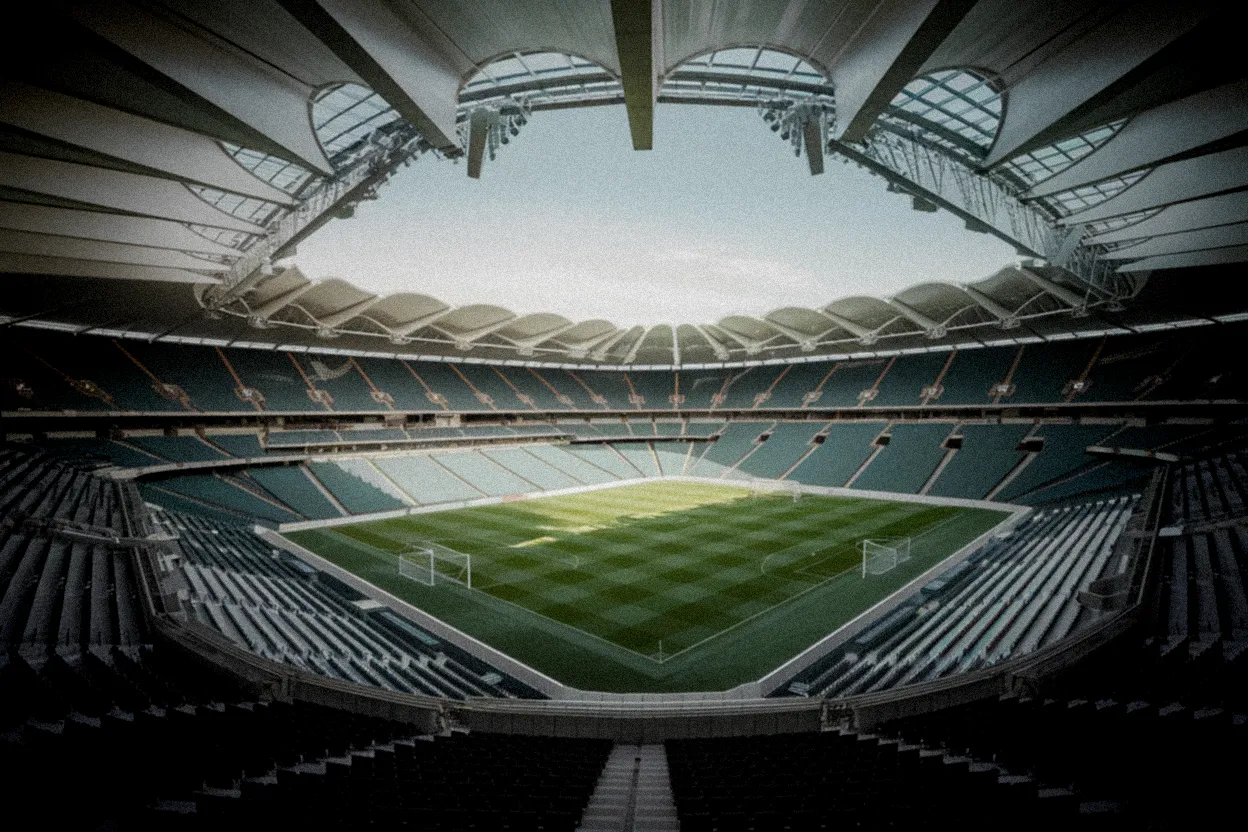
Paris Saint-Germain has commissioned a feasibility study on a major expansion of Parc des Princes, with capacity targets ranging from 60,000 to 70,000 seats.
The move confirms PSG has begun formal analysis—not construction—on whether its longtime home in Paris can be significantly enlarged. Parc des Princes currently holds about 48,000 spectators; jumping to 60,000 or even 70,000 would amount to roughly a 25% to 45% increase in capacity.
The study focuses on what is technically and structurally possible on the existing site in Paris’ 16th arrondissement, a wealthy residential district on the city’s western edge.
A feasibility study, not a green light for construction
PSG has not announced a finalized stadium project. What exists for now is an order for a feasibility study designed to determine whether an expansion can be carried out at Parc des Princes as it stands today.
That distinction matters: a feasibility study can conclude the project is fully possible, only partially possible, or not possible at all.
One major complication is ownership. Parc des Princes is owned by the City of Paris, which has long made large-scale changes politically and administratively complex. PSG leases the stadium; it does not own it.
Two capacity options: 60,000 or 70,000
The study examines two scenarios: expanding to 60,000 seats or to 70,000. Even 60,000 would be a substantial jump from the current configuration.
A 70,000-seat Parc des Princes would place the venue among Europe’s largest stadiums, comparable in scale to Atlético Madrid’s Metropolitano or Milan’s San Siro, according to the article.
The numbers also reflect a direct business incentive. Matchday revenue rises with the number of available seats. A 70,000-seat stadium filled at a similar rate would generate far more ticketing and hospitality income than a 48,000-seat venue.
Why expanding Parc des Princes is so complicated
Several factors make any expansion unusually difficult. First is the commercial upside: more seats mean higher matchday revenue, a straightforward lever for PSG.
Second is governance: because the City of Paris owns the stadium, any expansion would require political negotiation with city officials.
Third are urban constraints. Parc des Princes is hemmed in between Paris’ ring road (the Périphérique) and the Bois de Boulogne park, leaving limited room for a conventional expansion. The feasibility study is meant to determine what can be done structurally.
Finally, stadium capacity can matter in European soccer. UEFA considers venue size when awarding major events, including Champions League finals—an additional argument for increasing capacity.
The broader context: PSG’s long-running stadium question
PSG’s stadium situation has been a recurring issue for years. The club has explored multiple paths, including renovating Parc des Princes, building a new stadium, or buying the existing site.
Talks with the City of Paris have gone through tense periods, particularly during the mayoralty of Anne Hidalgo, the article notes.
A proposed stadium in Saint-Denis—raised more than once—never materialized. Separately, the Stade de France remains state-owned, and its post-2024 Olympics management has fueled its own political and economic debate, which the article says is not directly tied to PSG.
Reopening the option of expanding Parc des Princes would keep PSG in its historic home area—Paris’ 16th arrondissement, with Boulogne just across the way.
The constraints of Paris’ 16th arrondissement
Expanding a stadium embedded in a dense urban environment is rarely straightforward. Parc des Princes sits alongside the ring road, near the Bois de Boulogne, and next to residential neighborhoods.
Any attempt to build upward or outward would require extensive structural studies, negotiations with the city, and likely a lengthy administrative process—precisely what the club is trying to assess before committing politically or financially.
A message to sponsors, broadcasters, and European soccer officials
Commissioning the study also sends a signal beyond Paris. To TV-rights partners and sponsors, a PSG playing in a 70,000-seat stadium carries different weight in commercial negotiations.
And to European soccer authorities, capacity remains part of the calculus for hosting major events, including Champions League finals.
PSG has not announced any construction timeline. The feasibility study must deliver its conclusions before any concrete decision is made.

