
The money headed into AI infrastructure is staggering: projections call for $1.6 trillion in cumulative global investment in data centers by 2030, with more than $600 billion expected to be deployed in 2026 by big technology companies alone.
But the race to build the physical backbone for generative AI is running into hard constraints on the ground. Even as demand surges, the biggest projects increasingly hinge on basics that can’t be conjured by software—available land, reliable electricity, water for cooling, and the permits to put it all together.
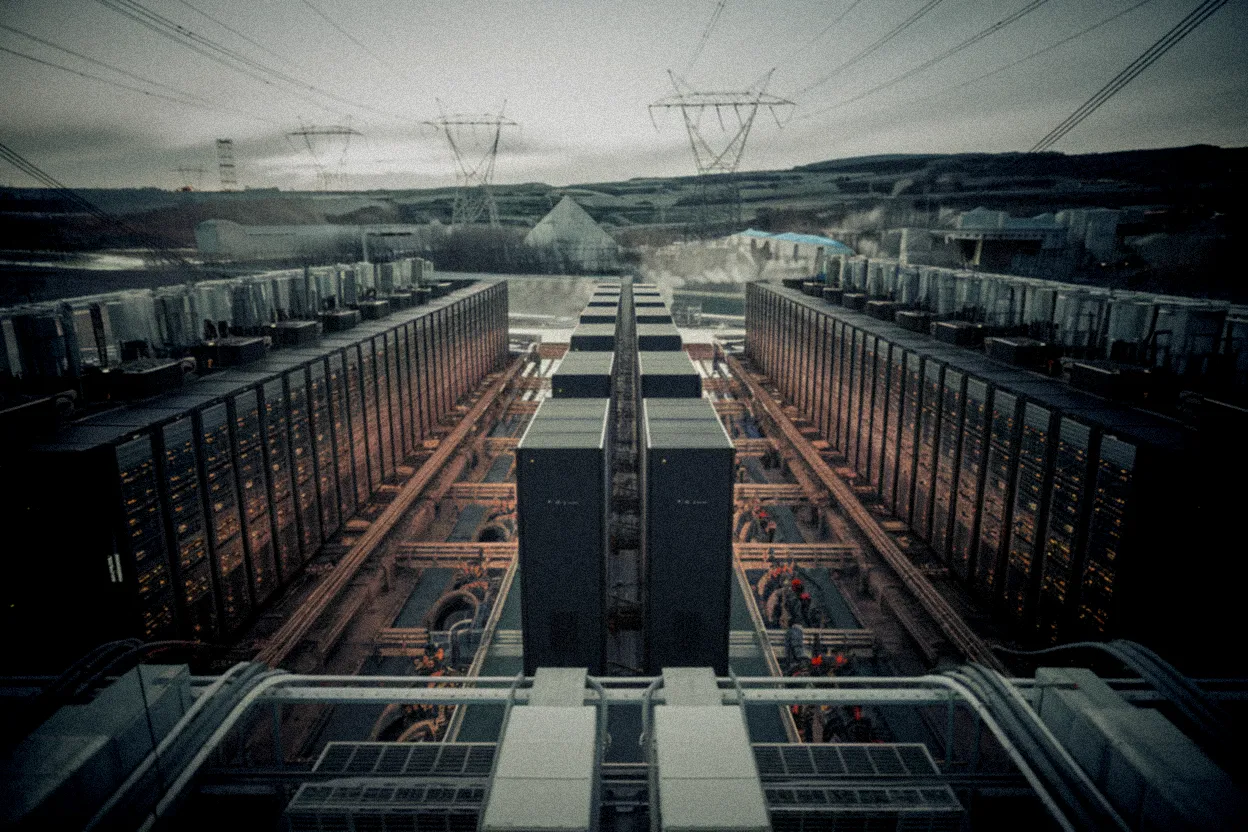
Research firm Omdia has started using a new term for what’s being built: the “AI Factory,” a heavy industrial-style installation designed for one purpose—producing intelligence, measured in tokens generated. In Omdia’s framing, this is no longer a traditional data center. It’s an industrial plant.
$600 billion in 2026 capex marks an “irreversible threshold,” Omdia says
Omdia estimates that the major technology companies’ combined capital spending will top $600 billion in 2026 for AI infrastructure alone. The firm describes that level as an “irreversible threshold,” arguing the AI Factory market has entered an industrialization phase defined by extreme capital intensity, complex technical barriers to entry, and a strong geopolitical dimension.
Looking out to 2030, Omdia pegs cumulative global investment at $1.6 trillion—placing AI infrastructure among the era’s mega-buildouts, comparable in financial scale to the electric grids and highway systems of the last century.
Land, power, water—and local acceptance—are becoming the bottlenecks
The tension is rising between operators’ ambitions and local realities. Siting a large data center requires significant acreage, a stable and massive electricity supply, and access to water for cooling—resources that many regions can’t provide without difficult tradeoffs.
The paradox is increasingly visible: investment totals are set to hit records, yet a meaningful share of projects is slipping. Forrester projected in late 2025 that companies would delay by about a year roughly 25% of their planned AI spending—an indicator that industrial momentum is colliding with operational and local constraints that are tougher than expected.
As data centers evolve into industrial production infrastructure, companies and governments are also rethinking where—and how—these facilities can be built. China is exploring space-based data centers as a way to bypass some terrestrial constraints. In the United States, OpenAI has inaugurated a site in Abilene, Texas, reflecting the search for places that are large, well-connected, and supplied with relatively inexpensive energy.
In France and across Europe, the push for “digital sovereignty”—keeping critical computing capacity on national or regional soil—adds another layer of urgency. The article argues that hosting these facilities domestically will require solving, at the same time, the challenges of low-carbon energy supply, land availability, and local acceptance; otherwise, AI production will remain concentrated elsewhere.

