
Tourism in Nouvelle-Aquitaine—France’s sprawling southwest region that includes Bordeaux, the Atlantic coast and the Basque Country—has become an economic force that regional officials now describe in industrial-scale terms.
The sector accounts for 9% of the region’s gross domestic product, generates €12.3 billion (about $13.3 billion) in direct visitor spending, and supports 142,000 direct jobs, according to figures cited by Passion Aquitaine / Ouest-France.
Those numbers sit behind a huge flow of visitors: 30 million stays a year and 57.4 million overnight stays recorded in 2025, making Nouvelle-Aquitaine France’s third-biggest tourist destination, behind Île-de-France (the Paris region) and Auvergne-Rhône-Alpes.
Record crowds at the Dune of Pilat, and camping dominates overnight stays
One of the region’s signature sites, the Dune of Pilat—Europe’s tallest sand dune on the Atlantic coast—logged 240,000 visitors in July 2025 alone, a monthly record.
Camping is a major driver of the region’s tourism footprint: campgrounds account for more than 30 million overnight stays across Nouvelle-Aquitaine.
A tourism “roadmap” through 2028 aims to make the region France’s top sustainable destination by 2030
With visitor volumes that large, the regional government and the regional tourism committee have adopted a 2023–2028 roadmap centered on sustainable tourism, with the stated goal of becoming France’s leading sustainable destination by 2030.
The plan was a focal point on May 28, 2026, in Poitiers, where the region held its “regional meetings on sustainable tourism,” bringing together regional elected officials around the issue.
The session was chaired by Rémi Justinien, vice president of the regional council in charge of the sea economy, tourism and territorial economy since December 2024, alongside Michel Durrieu, a regional councilor responsible for structuring and developing tourism.
The core challenge: protecting what draws visitors, from Creuse to Gironde
Officials framed the central question this way: how can a region as geographically varied as Nouvelle-Aquitaine—stretching from Creuse in the interior to Gironde on the coast—stay attractive without exhausting the natural resources that make it attractive in the first place?
The stakes are significant in a regional economy whose GDP reached €172 billion (about $186 billion) in 2020—described as comparable to Greece’s—making tourism a structural pillar rather than a side activity.
By the numbers: €12.3 billion in direct spending and 57.4 million overnight stays
Key indicators cited for Nouvelle-Aquitaine tourism include €12.3 billion (about $13.3 billion) in direct tourism spending, a 9% share of regional GDP, 142,000 direct jobs supported, 57.4 million overnight stays in 2025, and 30 million stays annually.
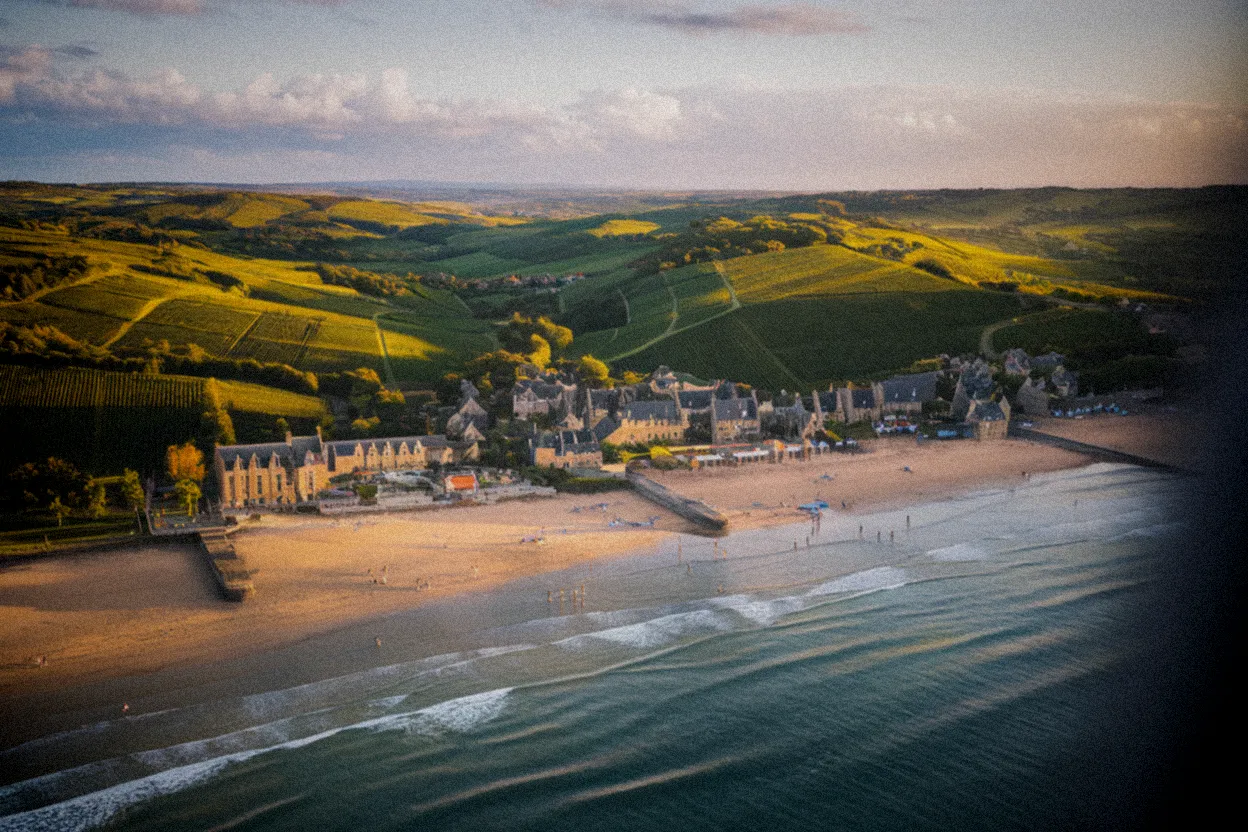
The region’s tourism appeal is also diversified, reducing reliance on any single draw: Bordeaux-area vineyards, the Atlantic coastline, the Périgord, the Marais Poitevin wetlands, and the Basque Country.
That breadth is what the 2023–2028 roadmap aims to promote—while avoiding the kind of crowding that can concentrate pressure on a handful of high-traffic sites.

