
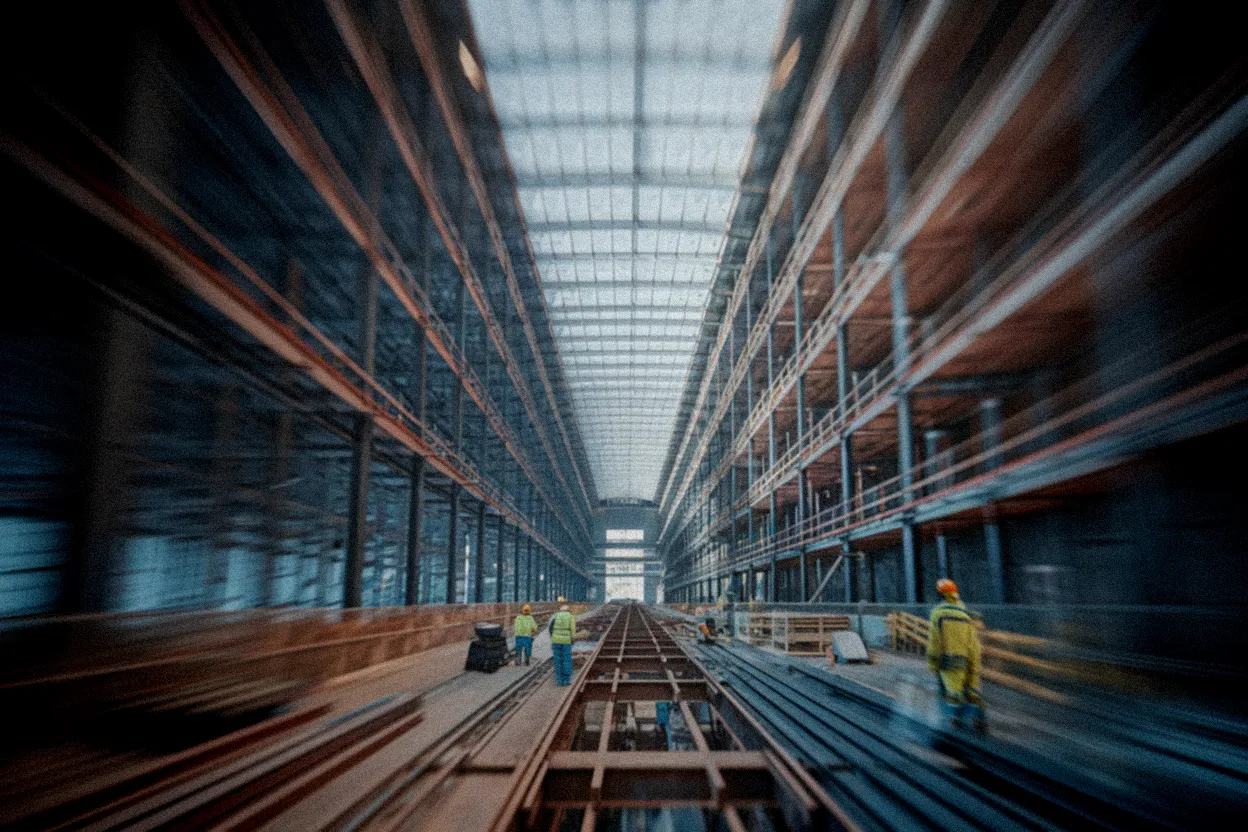
German automotive wiring giant Leoni has started building its 12th factory in Morocco, putting 640 million dirhams into the project as the country tightens its grip on a key slice of Europe’s car supply chain.
Construction is now underway on the new Leoni site, the company’s latest expansion in Morocco, where it already runs multiple production plants around Casablanca. The investment totals 640 million dirhams—about $69 million—signaling continued confidence in Morocco’s industrial base and its fast-growing auto sector.
The new factory adds to a sizable footprint that includes facilities in Casablanca-area industrial zones such as Bouskoura and Aïn Sebaâ. Leoni’s expansion comes as global demand for automotive wiring harnesses remains strong, even as carmakers retool for electrification—an engineering shift that typically requires more onboard cabling.
Morocco keeps pulling in the world’s top wiring suppliers
Morocco has become one of the go-to destinations for suppliers that specialize in automotive cabling, a labor-intensive segment of the industry that can be scaled quickly near major export routes. Japan’s Sumitomo has followed a similar playbook, inaugurating an eighth wiring-harness plant in Aïn Harrouda, an industrial city on Casablanca’s northeastern outskirts.
Leoni’s Morocco network is built to serve European automakers, supported by logistics close to the Strait of Gibraltar—one of the shortest shipping links between North Africa and Europe. That proximity helps suppliers feed assembly lines in Europe while keeping production costs competitive.
Morocco’s auto industry has posted years of strong export growth, driven by heavy foreign investment. Wiring harnesses are one of the sector’s pillars: the work is difficult to automate, requires trained hands, and is relatively straightforward to relocate—traits that fit Morocco’s industrial model. Each new plant can generate hundreds, and sometimes thousands, of direct jobs.
Leoni’s path in Morocco hasn’t been smooth throughout the past decade. The company previously shut its Bouznika site after losing a Volkswagen contract, prompting a reshuffling of capacity inside the country. The new factory signals a renewed push—likely tied to new automaker contracts or rising wiring volumes as electric vehicles, which are more cable-hungry than gas-powered models, take a larger share of production.
| Indicateur | Donnée |
|---|---|
| Nombre d’usines (après construction) | 12 |
| Investissement pour la 12e usine | 640 millions de dirhams |
| Sites historiques à Casablanca | Bouskoura, Aïn Sebaâ |
Source : Usine Nouvelle
Jobs now, skills next
Wiring-harness factories typically mean several hundred direct jobs, often in areas where the industrial base is still developing. Leoni’s 12th Moroccan plant fits that pattern: automotive cabling is among the biggest job absorbers in the country, with roles that demand precision and repeatability more than long formal training—making it easier to bring new hires up to speed quickly.
The longer-term challenge for Morocco is moving up the value chain. Assembling wiring harnesses generally delivers less value than designing or engineering electrical systems. Companies like Leoni are aware of that gap, and some contracts now include commitments tied to training and skills transfer.
Pourquoi le Maroc domine le câblage auto européen


Why electrification is driving the $69 million bet
The timing of Leoni’s investment is closely tied to the EV transition. An electric vehicle carries, on average, two to three times more wiring than a comparable internal-combustion model. Leoni’s main customers from its Morocco platform are European automakers, many of which are accelerating their shift toward electric models—automatically increasing the volume of cabling suppliers must produce.
Leoni has also expanded through consolidation in Europe: Valeo previously sold its wiring business to Leoni, a deal that reinforced Leoni’s role as a natural consolidator in the sector. The Morocco strategy extends that approach—concentrating production in a competitive-cost location less than two hours by sea from Spanish ports, then supplying assembly lines in Germany, France, and Spain. With 640 million dirhams committed to this 12th site, Leoni is betting that Europe’s demand for automotive wiring will stay strong in the years ahead.
Leoni au Maroc : chiffres clés du câblage automobile
- Leoni lance sa 12e usine au Maroc avec un investissement de 640 millions de dirhams.
- Le groupe exploite déjà des sites à Bouskoura et Aïn Sebaâ dans la région de Casablanca.
- Un véhicule électrique embarque deux à trois fois plus de câblage qu'un thermique.
- Sumitomo, autre câbleur mondial, exploite huit usines au Maroc, dont une à Aïn Harrouda.
- Leoni avait fermé son site de Bouznika après la perte d'un contrat Volkswagen.
Sources
5 sources · 5 faits sourcés

