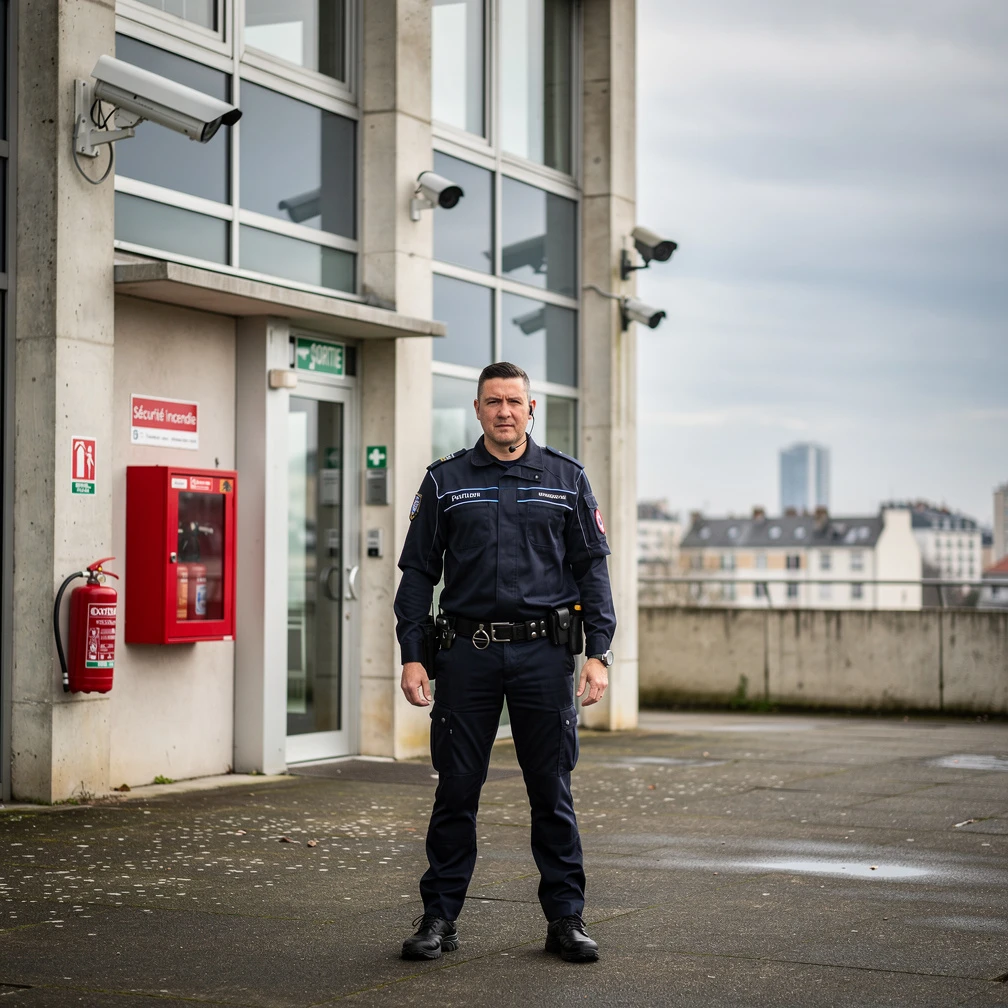
NANTES, France, In a fast-growing city on France’s Atlantic coast, more businesses and property managers are coming to a blunt realization: cameras and cheap alarm contracts don’t stop a break-in in progress, or keep a small fire from turning catastrophic.
Nantes, a regional hub about a two-hour drive west of Paris, has seen the pressures that come with population growth, expanding industry, and a packed calendar of public events. The result, security professionals say, is a wider target: more intrusions, more vandalism, more theft, and a persistent blind spot around fire prevention.
The message from the private-security world is simple: technology helps, but it doesn’t replace trained people on the ground who can spot trouble early, intervene quickly, and coordinate with emergency responders when seconds matter.
Why “eyes on site” still beats watching a screen
For years, the sales pitch has been that video surveillance can catch everything, every suspicious movement, every anomaly, before a crime even happens. In real life, a camera is only as useful as the response behind it.
Security firms operating in Nantes and across western France argue that trained guards physically present on-site remain the most reliable deterrent, especially in places where problems escalate fast: dim parking garages, industrial parks after dark, and large venues moving crowds in and out.
Regular patrols are a big part of that. A visible security presence can discourage opportunistic intruders, while also catching practical vulnerabilities, unsecured doors, broken gates, propped-open exits, before they become an incident.
Common on-the-ground tasks include:
- Day and night patrolsto cover high-risk hours
- Physical access checksto prevent quiet, low-profile entry
- Managing entry and exitfor staff and the public, especially during events
- Verifying doors and sensitive exitsto reduce exploitable gaps
- Are the company’s certifications and authorizations current?
- What training and experience do the assigned guards have?
- Can the provider offer credible client references?
Modern guarding isn’t “night watchman” work anymore
The article’s core argument is that guarding has evolved far beyond the stereotype of a sleepy guard behind glass. Today’s assignments demand flexibility: monitoring, anticipating, intervening, and working alongside police or fire services when needed.
On a typical site, that can mean identifying weak points before they’re exploited, responding to an intrusion alert, or triggering an evacuation plan. It also requires communication skills, de-escalating tense situations, giving clear instructions, and staying calm under pressure.
Security providers describe the job as active risk management, not passive observation. And they warn that bargain-basement contracts can translate into undertrained staff and slower, less effective responses.
Fire safety: the risk many sites treat like a paperwork chore
Fire prevention often gets attention only after something goes wrong. The article paints a familiar picture: extinguishers blocked by boxes, evacuation plans that look good on paper, and compliance treated as a box-checking exercise.
In France, many public-facing buildings and workplaces are required to maintain fire-safety systems and procedures, often involving specialized staff trained for fire prevention and emergency response. In practice, that means routine inspections, maintenance of alarms and suppression systems, and evacuation drills where every minute counts.
The warning is stark: ignoring fire safety doesn’t just risk property damage, it risks lives and can shut down operations for months.
How to pick a private security provider, and avoid “too cheap to be true” deals
The article urges businesses and property managers in Nantes to vet security companies the way they’d vet any critical contractor: check credentials, ask for references, and evaluate how quickly the firm can respond when something happens.
Key questions to ask include:
The bottom line: as risks multiply and incidents become more complex, treating security as a line item to minimize can backfire, financially and operationally. In a city like Nantes, the article argues, the real “upgrade” isn’t another camera. It’s a professional response that shows up before the damage is done.
| 🔹 Contexte | 🔸 À Nantes et dans le Grand Ouest, la sécurité privée devient essentielle face à la hausse des risques (intrusions, incendies, incivilités). |
| 🔹 Enjeu principal | 🔸 La sécurité ne peut pas reposer uniquement sur la technologie: le facteur humain reste central. |
| 🔹 Surveillance humaine | 🔸 Les agents sur site assurent dissuasion, contrôle des accès et intervention rapide, plus efficaces que la seule vidéosurveillance. |
| 🔹 Gardiennage moderne | 🔸 Missions polyvalentes: anticipation des risques, gestion des incidents, coordination avec les secours. |
| 🔹 Sécurité incendie | 🔸 Souvent négligée mais cruciale: inspections, maintenance des équipements et gestion des évacuations sont indispensables. |
| 🔹 Externalisation | 🔸 Permet une intervention 24/7, réduit les erreurs et garantit une expertise technique fiable. |
| 🔹 Choix d’une agence | 🔸 Vérifier certifications, réactivité et références; se méfier des offres à bas coût. |
| 🔹 Missions couvertes | 🔸 Surveillance, gardiennage, gestion des alarmes, sécurité incendie sur divers sites (industries, bureaux, événements). |
| Missions | Durée | Compétences spécifiques |
|---|---|---|
| Surveillance | Jour/nuit | Vigilance, autorité |
| Gardiennage | Continue | Résistance au stress, médiation |
| Sécurité incendie | Ponctuelle/continue | SSIAP, gestion du risque |