
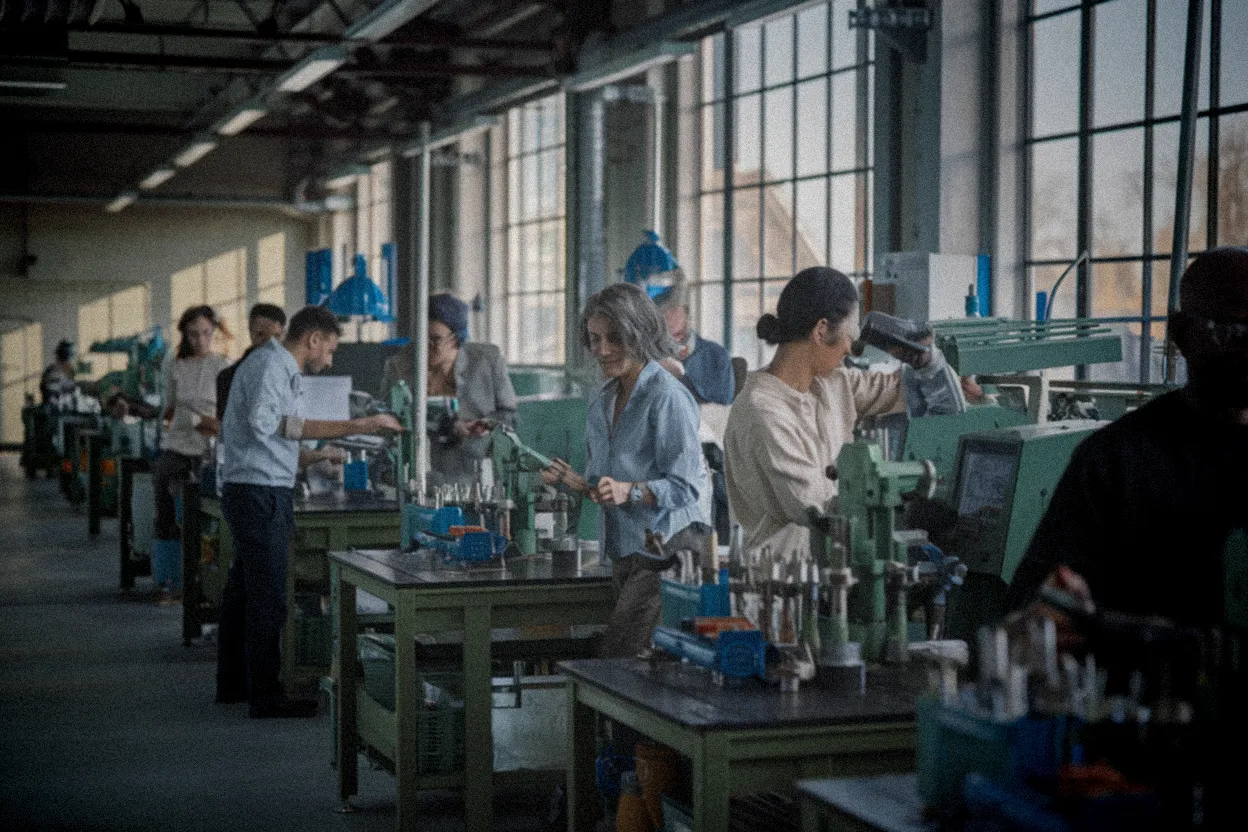
In Cuers, a small industrial town in France’s Var department near the Mediterranean coast, a company called CVSI is betting its growth plan on an unusual pitch for manufacturing: hiring people who are far from the job market as a competitive edge.
The small and mid-size firm says it aims to reach €10 million (about $10.8 million) in revenue and employ 100 people by 2030—goals it frames not as a social program, but as an industrial strategy.
A growth plan built around inclusion
CVSI’s leadership is explicit about its targets: €10 million (about $10.8 million) in revenue and a workforce of 100 by 2030. The company’s model is rooted in what France calls “adapted enterprises” or “insertion through economic activity”—structures designed to bring people with barriers to employment into stable work.
Rather than treating that hiring approach as a constraint, CVSI organizes its operations around it. The company argues that recruiting and training more fragile or nontraditional candidates is not a social cost, but a way to build a more reliable workforce.
That approach, still relatively uncommon in French industry, is starting to translate into business opportunities, according to the article. As major clients face growing regulatory and societal pressure, they are increasingly adding “responsible purchasing” requirements to bids—criteria that include social considerations.
For a company like CVSI, that shift can change its role from a quiet subcontractor to a strategic partner for customers looking to highlight the social dimension of their supply chain.
Why Cuers matters in the local industrial map
CVSI’s base in Cuers is part of the story. The Var has an industrial and logistics ecosystem tied to the proximity of military bases and defense industries along France’s Mediterranean coastline, the article says.
In that context, a company that can provide trained, supervised, available labor meets a concrete need for local subcontractors. The article also places CVSI within a broader push to reindustrialize “intermediate” territories—areas outside major metro centers but close to production zones.
Reaching 100 employees in Cuers by 2030 would require a significant recruitment and training effort for a town of its size, the article notes.
Pourquoi l'inclusion industrielle change de statut


Inclusion as an operating advantage—not a branding exercise
What sets CVSI apart, the article argues, is how it presents inclusion: not as a corporate social responsibility posture, but as a driver of competitiveness. The company’s ability to bring in atypical profiles, train them on the job, and retain them is described as an advantage in markets where turnover can weigh heavily on operating costs.
The 2030 goal remains ambitious given the company’s current size, the article says. But if CVSI hits its targets, it could become a case study for France’s social and solidarity economy—an ecosystem that has often struggled to persuade traditional industry that inclusive models can hold up under competitive pressure.
CVSI Cuers : les chiffres de l'ambition 2030
- CVSI est implantée à Cuers, dans le Var.
- L'objectif de la direction est d'atteindre 10 millions d'euros de CA d'ici 2030.
- L'entreprise vise 100 salariés à cet horizon.
- Le modèle repose sur le recrutement de publics éloignés de l'emploi comme levier de compétitivité.

