
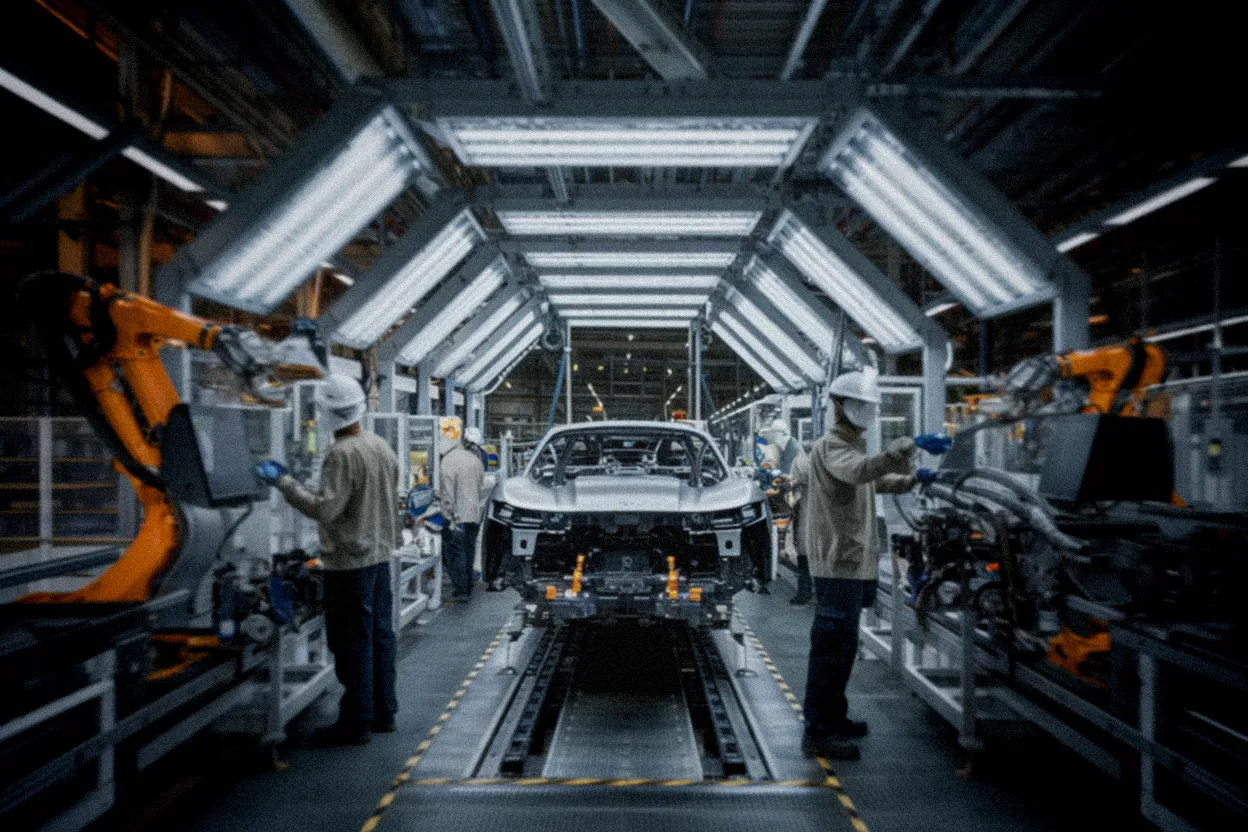
Stellantis says it will inject €1 billion (about $1.08 billion) into its Mulhouse factory in eastern France—an announcement with outsized significance for a French auto sector that has been bracing for cuts and restructuring.
The investment, reported this week and framed as a major commitment at one of the company’s long-standing French sites, lands after Stellantis has rolled out multiple workforce and production-speed reduction plans across Europe since 2024.
Mulhouse is a historic Stellantis footprint in France, assembling several versions of the Peugeot 508 and the Peugeot 3008. While the company has not disclosed which production lines would be upgraded or which models would be targeted, the scale of the spending signals at minimum an intention to maintain—if not revive—local manufacturing.
A €1 billion pledge for Mulhouse, with few details so far
The number is straightforward: €1 billion (about $1.08 billion). That’s what Stellantis is preparing to commit to its Mulhouse site in Alsace, according to information reported this week.
The timing is as political as it is industrial. France’s government has been pressing automakers for months to reaffirm their manufacturing presence in the country, warning that public aid could increasingly be tied to production commitments on French soil. For Stellantis—led by CEO João Tavares, who has faced a series of image crises since taking the job—Mulhouse offers a chance to send a clear signal.
What €1 billion typically means inside an auto plant
To put the figure in context, the Mulhouse factory employs several thousand workers. At an automotive site of this size, a €1 billion investment generally points to major assembly-line modernization, the integration of a new generation of robots, or a shift toward electric-vehicle production.
None of those directions has been officially confirmed at this stage, based on the information available. What is clear is that a commitment of this magnitude implies multi-year visibility: companies don’t spend €1 billion on a plant they expect to close in 18 months.
Pourquoi cet investissement compte pour l'industrie auto française


Pressure on Stellantis to prove its “Made in France” commitments
The Italy- and U.S.-linked automaker was sharply criticized in 2024 and 2025 for pulling back in Europe—particularly by reducing volumes produced at Sochaux and freezing several projects. The Mulhouse announcement can be read as a rebalancing effort and an attempt to rebuild trust with unions, elected officials, and the French state as a shareholder through Bpifrance (France’s public investment bank).
Still, the information available does not specify whether the investment includes any plan for net job creation. In France’s public debate over reindustrialization, the difference between preserving industrial capacity and actually growing employment remains central.
A broader week of investment signals in French industry
Stellantis’ move comes during a week marked by several upbeat signals for French industry. Biomérieux is opening a new factory, Pierre Fabre is doubling capacity at its Avène site, and a CO2 capture system has drawn attention.
They’re different sectors, but the same underlying theme: companies investing domestically while deindustrialization remains a persistent national concern. In autos specifically, the stakes go beyond Mulhouse—France today produces far fewer vehicles than it consumes, making each manufacturing investment announcement a closely watched indicator of direction, not just a corporate decision.
Mulhouse as a real-world test
The Alsace plant is now set to become a case study. If Stellantis follows through and production rises, the argument for an industrial revival in France will be hard to dismiss. If the lines remain underused despite the promised €1 billion, the company’s credibility could take another hit.
Unions and local officials are now waiting for a precise timeline and guarantees on volumes. Announcing €1 billion is one thing. Deploying it—line by line—is another.
Stellantis Mulhouse 2026 : les points clés
- Stellantis annonce 1 milliard d'euros d'investissement sur son site de Mulhouse.
- L'usine de Mulhouse assemble notamment des modèles Peugeot.
- L'annonce intervient après plusieurs plans de réduction des cadences en Europe en 2024-2025.
- Aucune précision sur les créations d'emplois nettes n'a été communiquée à ce stade.

