
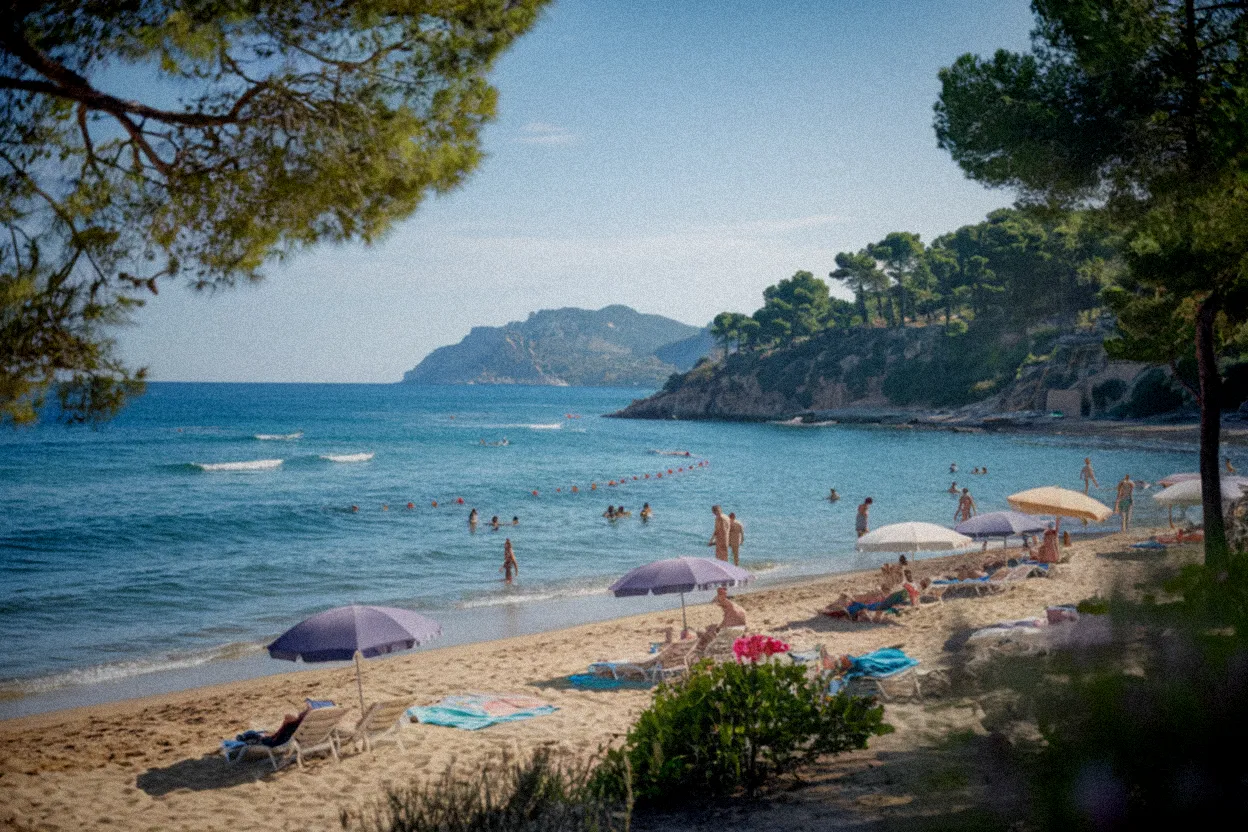
An independent French environmental group says roughly one in five beaches in France is repeatedly contaminated by bacteria—an assessment that paints a mixed picture for the Mediterranean coast, including popular stretches in the Var and Alpes-Maritimes.
The ranking comes from ERB, an independent association that built its own “health” indicator using the same official sampling data collected for France’s Health Ministry, but scored with a different method. ERB assigns each beach a grade out of 100 based on the share of samples authorities classify as “average” or “bad.” A score of 90, for example, means 10% of samples are considered problematic.
ERB splits beaches into four categories: “recommended” (95 or higher), “low risk” (85 to 95), “not recommended” (70 to 85), and “to avoid” (below 70). Christophe Le Visage, ERB’s vice president, said the goal was to challenge what he views as overly reassuring official labels: “We tried to design another ranking with the same data. Because many beaches are classified as good or excellent even though they experience pollution.” He added: “With the concentrations of bacteria we observe on certain beaches, there are risks for swimmers.”
ERB says 37% of beaches are “recommended,” while about 20% show recurring problems
Across France’s coastline, ERB says 690 beaches qualify as “recommended,” representing 37.2% of the total. Another 755 beaches—40.7%—are rated “low risk.” The remainder, about one beach in five, falls into the lower categories, according to the group’s analysis.
| Catégorie | Note sur 100 | Nombre de plages | Part du total |
|---|---|---|---|
| Recommandée | 95 et plus | 690 | 37,2 % |
| Peu risquée | 85 à 95 | 755 | 40,7 % |
| Déconseillée | 70 à 85 | N.D. | N.D. |
| À éviter | Moins de 70 | N.D. | N.D. |
Source : Tahiti Infos / AFP
The highest-rated beaches cluster along France’s Atlantic coast, as well as in Occitanie (a region in southern France) and on the Mediterranean island of Corsica. ERB’s top group includes Lège-Cap-Ferret in Gironde, Palavas-les-Flots in Hérault, and Etel in Morbihan—destinations the article describes as combining relatively preserved coastlines with lower agricultural pressure.
Alpes-Maritimes ranks near the bottom; the Var is less affected
ERB’s lowest performers are concentrated in northern France and along parts of the Channel coast—Nord, Pas-de-Calais and Calvados—as well as the north coast of Brittany and the Alpes-Maritimes, the French Riviera department that includes cities near Nice.
Saint-Laurent-du-Var is named among the beaches at the tail end of the national ranking, alongside Landunvez in Finistère and Boulogne-sur-Mer in Pas-de-Calais.
In the Alpes-Maritimes, the issue has been documented for several years, the article says, citing heavy coastal urbanization, a wastewater system under strain, and overload episodes during peak tourist season. Le Visage pointed to what he described as a paradox: public spending on sanitation is often concentrated where it is least necessary from a public-health standpoint.
“We invest millions of euros in sanitation, even though many polluted beaches are located in areas where there are few tourists and little urbanization, like in northern Brittany,” he said. ERB estimates that about 60 beaches in Brittany are affected by pollution directly linked to slurry spread on fields. Le Visage also offered a comparison meant to illustrate the scale of agricultural bacterial loads: “In terms of bacteria, one pig is the equivalent of thirty humans.”
Pourquoi certaines plages méditerranéennes restent à risque


ERB pushes for tougher oversight and more transparency
ERB says its project goes beyond publishing a league table. The association is calling for more transparency, stronger monitoring of bathing-water quality, and tighter rules for livestock effluent.
The Health Ministry’s official indicator—published on baignades.sante.gouv.fr—is not precise enough, ERB argues. By reprocessing the same underlying data with a different weighting method, the group says it reaches noticeably less favorable ratings for several sites that public authorities classify as “good” or “excellent.” That gap matters, ERB says, because it affects the information swimmers rely on before entering the water.
For summer 2026, the article’s practical takeaway is straightforward: favor beaches rated “recommended” or “low risk” on ERB’s map—particularly along the Var coast and in the highly rated Atlantic and Corsican areas. Beaches in the Alpes-Maritimes that are flagged as exposed warrant extra caution, especially after heavy rain, when bacterial discharges rise sharply.
Qualité des eaux de baignade 2026 : les chiffres du classement ERB
- 690 plages françaises sont classées 'recommandées' par l'association ERB, soit 37,2 % du total.
- Saint-Laurent-du-Var figure parmi les plages en bas du classement national.
- Les meilleures plages se situent sur la façade atlantique, en Occitanie et en Corse.
- ERB utilise les données officielles du ministère mais avec une méthode de notation différente.
- Une soixantaine de plages bretonnes seraient contaminées par des effluents d'élevage.
Sources
1 source · 1 fait sourcé

