
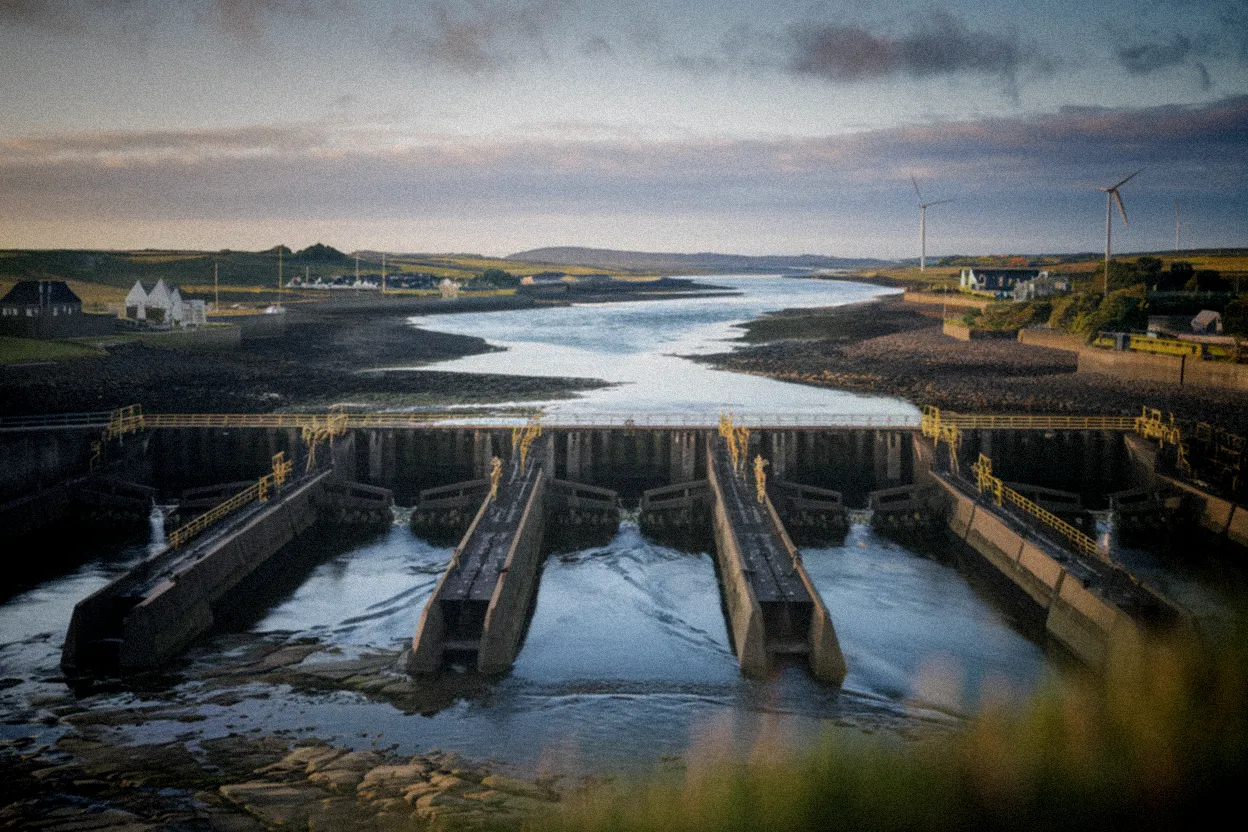
France’s Rance tidal power plant—built across the estuary between Dinard and Saint-Malo in Brittany—is marking 60 years of continuous operation in 2026, a rare milestone for any large-scale energy facility.
In service since 1966, it remains the only tidal power plant of its kind still operating in France and one of the few worldwide that harnesses the kinetic force of ocean tides at this scale. Its anniversary arrives as renewable energy weighs heavily in industrial and political decision-making.
A bold 1960s engineering bet on the tides
The project dates back to the postwar years, driven by a push to find alternatives to coal and oil. The Rance estuary offered an unusually large tidal range that can exceed 10 meters—about 33 feet—creating a natural advantage that was hard to ignore.
The plant was designed to capture the difference in water level between high tide and low tide by running turbines in both directions. That approach was an engineering feat for its time and required building a dam roughly 750 meters long—about 0.5 miles—across the estuary.
The site has produced electricity steadily for six decades without fossil fuels and without direct CO2 emissions. Its longevity is credited both to the durability of its original design and to ongoing maintenance.
Six decades of generation—and a region shaped by an industrial landmark
The anniversary also lands in a region that still carries the imprint of that industrial history. Dinard, the town on the left bank of the dam, remains closely associated with the infrastructure—alongside its beaches and seaside architecture.
Since September 2025, Dinard has also been home to a local commercial entity, L’Entre Deux, a simplified joint-stock company (SAS) created on September 22, 2025. Its headquarters is listed at 20 rue du Maréchal Leclerc, and its president is Dylan Rinaldi, according to official data from France’s INSEE statistics agency and the INPI intellectual property office available on data.gouv.fr. The detail points to the area’s economic activity, even as the Rance plant remains—60 years after its inauguration—the most visible industrial marker on the landscape.
Why France didn’t replicate the Rance model
The Rance plant did not trigger widespread copycat projects in France, largely because the geographic constraints are severe. Few estuaries combine a large enough tidal range with conditions suitable for building a structure of this type.
More recently, offshore tidal-current projects—designed to capture marine currents without a dam—have opened other avenues, including in the Raz Blanchard and the Fromveur. But none has yet reached the industrial maturity of the Rance facility.
A lasting reference point in France’s energy debate
Sixty years after it began operating, the Rance tidal power plant remains a touchstone in the history of French energy—and a concrete example in ongoing debates about diversifying the country’s electricity mix.

