
Tourism activity picked up across France’s Caribbean territories in 2025, powered largely by cruise travel in Martinique, according to the latest annual economic report from the Iedom, the public institution that tracks and supports the economies of France’s overseas departments.
But the rebound came with a warning label. The Iedom described Martinique’s economy as “in convalescence,” a phrase meant to capture both the recovery and its limits, as construction and a growing wave of business failures continued to drag on the broader outlook.
In Guadeloupe, the picture was broadly similar. Charles Apanon, the Iedom’s director, and Bérengère Callamand, who oversees research and credit institutions, called the overall 2025 assessment “gloomy,” citing weakness in both tourism and the construction sector.
Construction emerges as the most exposed sector
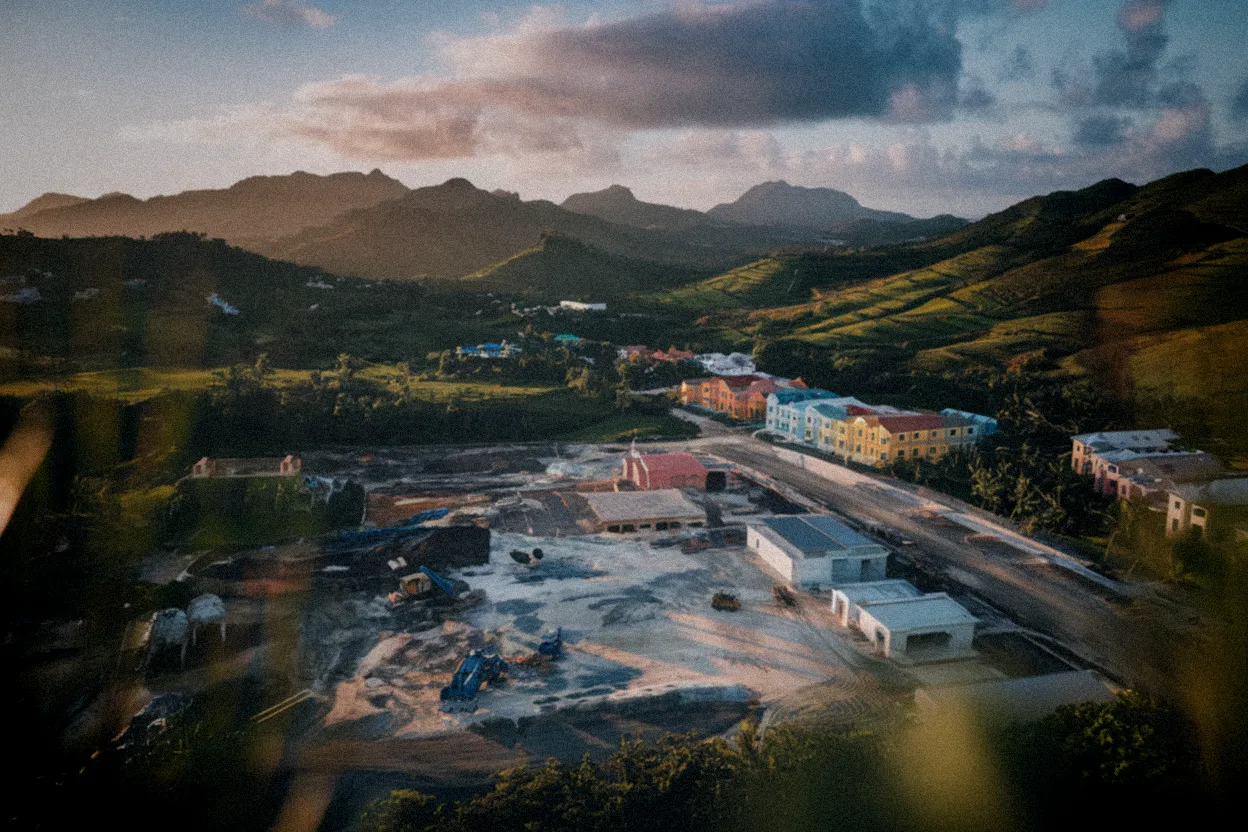
The building and public works sector—known in France as “BTP”—showed the most visible strain, the Iedom said. Heavily dependent on public contracts, it has been hit hard by the slump in new housing and rising materials costs.
Representatives of Guadeloupe Économique, a local business group, issued their own warning, describing the construction sector as “on the verge of collapse.”
The stress is also showing up in insolvency data. In 2025, 2,832 business failures were recorded across France’s overseas territories. In the first quarter of 2026, the trend did not reverse: overseas regions posted a 9.8% year-over-year increase in business failures, compared with 5.0% in mainland France, for a total of 69,938 court rulings overall.
That pace marked a slight easing from the fourth quarter of 2025, when the annual increase reached 12.5%, but the pressure remains high.
Retail, restaurants, and lodging were also among the sectors most affected by collective insolvency proceedings, the Iedom said—caught between household budget tradeoffs and sensitivity to swings in tourist traffic. The overseas economic structure, dominated by very small businesses, amplifies the impact of those shocks.
Why 2026 still looks uncertain
Looking ahead, the Iedom pointed to several forces still weighing on local companies’ cash flow: the gradual wind-down of public support measures introduced during the COVID-era crisis, tighter credit conditions, and persistent inflation in operating costs.
In Martinique, there had been a brief sign of improvement in the second quarter of 2025. The business climate indicator reached 104 points, up three points from the previous quarter. At the time, the Iedom said that “the deterioration in the general context has stopped.”
Even then, expectations were cautious and focused on two sectors now moving in opposite directions: construction and tourism.
The Iedom—which also covers the French territories of Saint-Martin and Saint-Barthélemy—said it will maintain its commitment in 2026 to supporting businesses and the most financially vulnerable households, with particular attention to the overseas structures most exposed to an economic downturn.

